Marine Anchor Chain Swivel group (E+SW+EL+C) Forerunner Piece
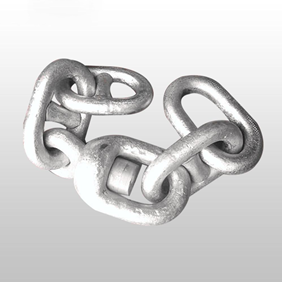
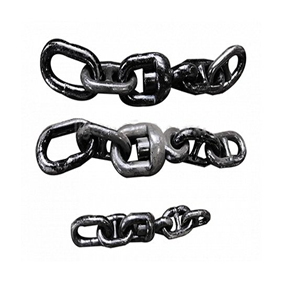
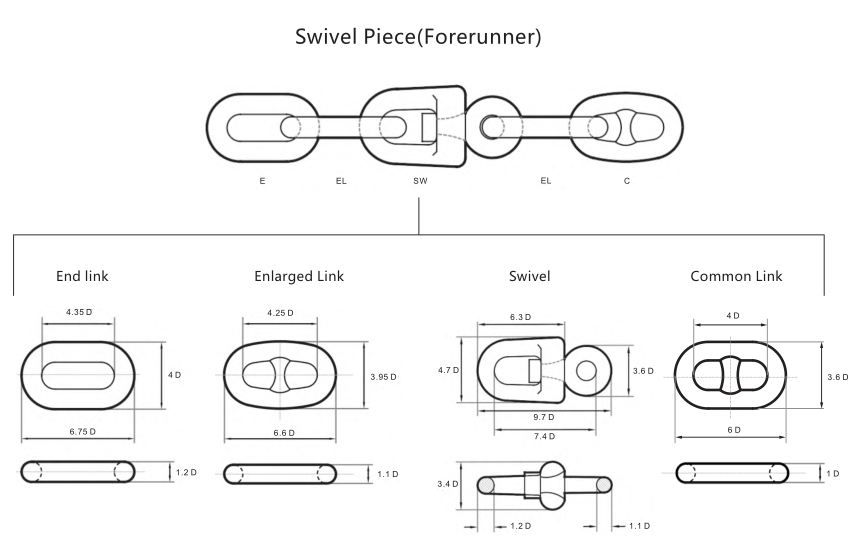
Swivel Forerunner(Swivel Piece) include End Link, Enlarged Link, Swivel, Enlarged Link and Common Link, commonly used to connecting End Shackle and anchor chains.
Joining the stud link chain and the anchor, a 3-link or 4-link swivel forerunner is the most common swivel-connector in use today due to its optimal design. The anchor-side of the swivel forerunner is open for fitting a "D" end shackle. The other side is a common link to fit a Kenter joining shackle. The swivel forerunner is produced to ISO 1704 standards.
Marine Anchor Chain Swivel Group (E+SW+EL+C) Forerunner Piece is a swivel connection assembly installed between the anchor and the anchor chain to reduce chain twisting during anchoring operations. By allowing controlled rotation between the anchor and the chain, the swivel helps prevent accumulated torsional loads that can interfere with anchor deployment, retrieval, and chain handling.
The assembly is manufactured from forged alloy steel using closed-die forging, followed by machining, heat treatment, dimensional calibration, and mechanical testing. The standard connection arrangement consists of:
E = End Link
SW = Swivel
EL = Enlarged Link
C = Common Link
This configuration provides a direct connection between the anchor-side D-type end shackle and the Kenter joining shackle on the chain side while maintaining compatibility with standard stud link anchor chains and windlass equipment. The swivel rotates under load to reduce chain twisting while maintaining tensile load transfer through the anchoring system.
Standard products are available for U2 and U3 anchor chain grades with nominal chain diameters from 12.5 mm to 162 mm. The swivel group is widely used on container ships, bulk carriers, oil tankers, LNG carriers, offshore support vessels, FPSOs, floating production units, naval vessels, and permanent offshore mooring systems.
Product Features
Forged alloy steel construction
Standard connection form E + SW + EL + C
Reduces anchor chain twisting
Compatible with stud link anchor chains
Available for U2 and U3 chain grades
Suitable for chain diameters from 12.5 mm to 162 mm
Permanent identification marking and complete traceability
Parameter
Standards
Name: Marine Anchor Chain Swivel Group (E+SW+EL+C) Forerunner Piece
Manufacturing Standards: Manufactured from CM490 or CM690 forged steel in accordance with ISO 1704, IACS Unified Requirement W18, IACS Unified Requirement A1, and the applicable requirements of ABS, BV, CCS, DNV, LR, NK, KR, RINA, and RS for anchor chain accessories. All load-bearing components are closed-die forged, heat treated, precision machined, and dimensionally calibrated to match the corresponding anchor chain grade.
Testing Standards: Each swivel group undergoes chemical composition verification, forging inspection, heat treatment verification, dimensional inspection, proof load testing, tensile property verification, hardness testing, magnetic particle inspection (MPI), visual inspection, swivel rotation verification, assembly inspection, and permanent identification marking before shipment. Material certificates, inspection reports, and classification society certificates are available upon request.
Application Standards: Suitable for connecting anchors, end shackles, Kenter shackles, and stud link anchor chains on commercial ships, container vessels, bulk carriers, oil tankers, LNG carriers, offshore platforms, FPSOs, floating production systems, naval vessels, and permanent offshore mooring installations. The swivel group is designed to reduce chain twisting and improve anchor handling performance.
Maintenance Standards: Inspect the swivel group regularly for body deformation, swivel rotation, bearing wear, pin wear, enlarged link wear, corrosion, cracks, excessive wear, and identification markings. Verify that the swivel rotates freely without excessive clearance and that all connecting components remain securely assembled. Replace worn or damaged assemblies immediately in accordance with the inspection requirements of the applicable classification society.