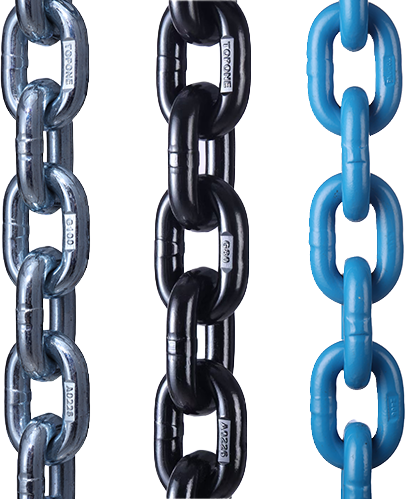
Choosing the right chain sling requires more than matching the sling to the weight of the load. A suitable chain sling must have enough Working Load Limit (WLL), the correct chain grade and diameter, an appropriate number of legs, and a configuration that matches the load and lifting method.
The shape of the load, lifting points, sling angle, hitch type, chain length, hooks, master links, and working environment can also affect the selection.
A practical chain sling selection process follows this sequence:
Load → Configuration → Sling Angle → Grade → WLL → Chain Diameter → Components → Working Conditions
This approach helps prevent both undersized slings and unnecessary oversizing while ensuring that the complete sling assembly is suitable for the intended lifting operation.
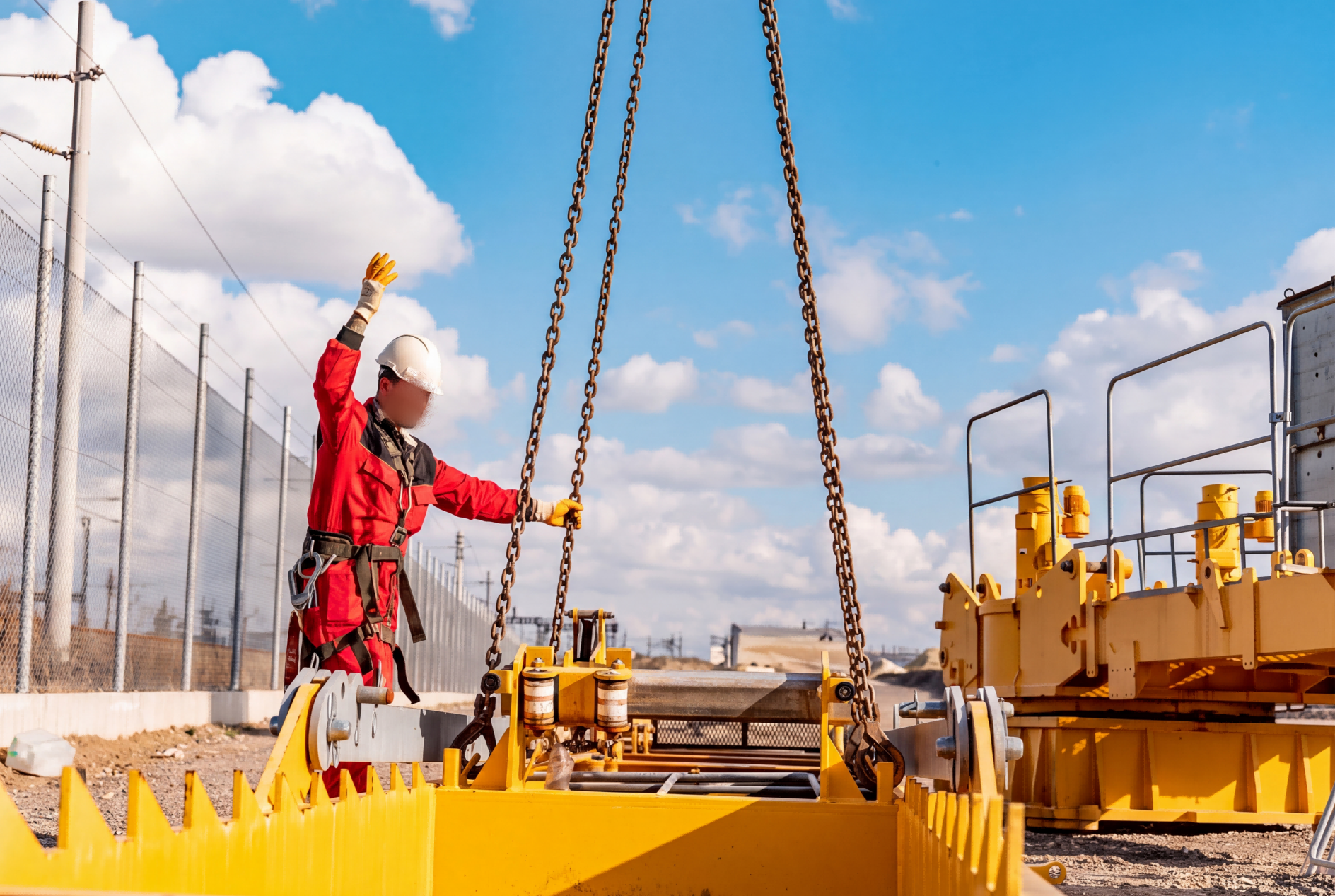
What Is a Chain Sling and Why Does Selection Matter?
A chain sling is a lifting assembly made from alloy steel lifting chain and compatible load-bearing components. Depending on the configuration, it may include a master link, lifting chain, connecting links, hooks, shortening devices, and other fittings.
Unlike a general-purpose chain, a lifting chain sling is manufactured, tested, marked, and rated for lifting applications. The rated capacity applies to the specified sling configuration rather than simply to the chain itself.
For this reason, chain sling selection should begin with the complete lifting requirement.
Consider a machine weighing 4,000 kg. If the lifting arrangement also includes a spreader beam, shackles, or other equipment suspended by the sling, the complete suspended load may be higher than 4,000 kg. The sling must have an appropriate WLL for the actual lifting arrangement.
The load itself also matters. A compact, symmetrical machine with four dedicated lifting lugs may require a different sling configuration from a long steel structure with two lifting points. A load with sharp edges may also require suitable protection or a different rigging arrangement.
Before selecting a chain sling, establish:
Maximum load weight
Load dimensions and center of gravity
Number and position of lifting points
Required sling length or reach
Hitch type
Sling angle
Lifting frequency
Working environment
Once these conditions are known, the chain sling can be selected based on its rated capacity and configuration.
How to Select the Right Chain Sling Capacity
The most important part of chain sling selection is determining the required Working Load Limit.
The basic principle is:
Required Sling WLL ≥ Maximum Intended Load
However, the rated WLL of a chain sling depends on how it is configured. A single-leg sling, two-leg sling, and four-leg sling made from the same chain may have different rated capacities.
Start with the Maximum Load
Use the heaviest load that the sling is expected to lift rather than the average load.
For example, if a maintenance team normally lifts components weighing between 1,500 and 2,500 kg but occasionally needs to lift a 3,500 kg component, the selection should account for the 3,500 kg load if the same sling is intended for that operation.
The load should also be accurately determined whenever possible. Guessing the weight of heavy machinery or fabricated structures can result in an incorrectly rated sling.
Consider the Complete Sling Configuration
Do not select the chain simply by dividing the load by the number of legs.
For example, a 6,000 kg load lifted by a two-leg sling does not automatically mean that each chain leg only carries 3,000 kg. The sling angle changes the tension in each leg.
For a symmetrical two-leg arrangement, a simplified relationship is:
Leg Tension = Load ÷ (2 × cos θ)
where θ is the angle of each sling leg from vertical.
Sling Angle from Vertical | Approx. Tension per Leg for 6,000 kg Load |
0° | 3,000 kg |
30° | 3,464 kg |
45° | 4,243 kg |
60° | 6,000 kg |
This example shows why sling angle must be considered before selecting the chain size.
The calculation is useful for understanding the relationship between angle and tension, but actual lifting operations should use the manufacturer's rated WLL table for the specific chain sling configuration.
Select the WLL Before the Chain Diameter
Once the maximum load and sling configuration are established, select a chain whose rated capacity meets the requirement.
For example, if a particular two-leg configuration requires a WLL of at least 5,000 kg, select the appropriate Grade 80 or Grade 100 chain and diameter from the manufacturer's rated load table.
Do not start by saying, “I need a 10 mm chain,” and then try to determine whether it is strong enough.
The correct approach is:
Required Load → Required WLL → Chain Grade → Chain Diameter
This is the foundation of reliable chain sling selection.
Related articles : How to Choose the Right Chain Block for Your Lifting Needs
Choose the Right Chain Grade, Diameter and Configuration
Chain grade and diameter work together to determine the rated capacity of the lifting chain.
Grade 80 and Grade 100 alloy steel chains are widely used for lifting applications. Grade 100 generally provides a higher WLL than Grade 80 at the same nominal diameter when the chains are manufactured and rated according to comparable standards.
This can make Grade 100 useful when a higher capacity is required without increasing chain diameter as much.
Selection Factor | What It Affects |
Chain Grade | Strength and rated capacity |
Chain Diameter | Load-bearing capacity and sling weight |
Number of Legs | Load distribution and stability |
Sling Angle | Tension in each leg |
Hitch Type | Rated capacity and load connection |
Reach | Positioning and lifting geometry |
Grade 80 vs Grade 100
Grade 80 is a widely established choice for general industrial lifting and chain sling assemblies. It offers a practical combination of strength, durability, and component availability.
Grade 100 provides a higher strength level and can offer a higher WLL at the same nominal diameter. It may therefore be advantageous where higher capacity or a lighter sling assembly is required.
However, selecting Grade 100 does not mean that every component in an existing Grade 80 sling can automatically be replaced. Hooks, master links, connecting links, and other fittings must be compatible with the chain grade and rated configuration.
Choosing Chain Diameter
Common lifting chain diameters include:
6 mm, 7 mm, 8 mm, 10 mm, 13 mm, 16 mm, 20 mm, 22 mm, 26 mm and larger sizes, depending on the grade, standard, and manufacturer.
There is no universal WLL for each diameter.
For example, a 10 mm Grade 80 chain and a 10 mm Grade 100 chain should not be assumed to have the same capacity.
A larger chain is also not automatically a better choice. Oversizing can increase sling weight, component size, cost, and handling difficulty.
The ideal diameter is the size that provides the required WLL for the specified configuration without creating unnecessary weight or dimensional problems.
Choosing the Number of Legs
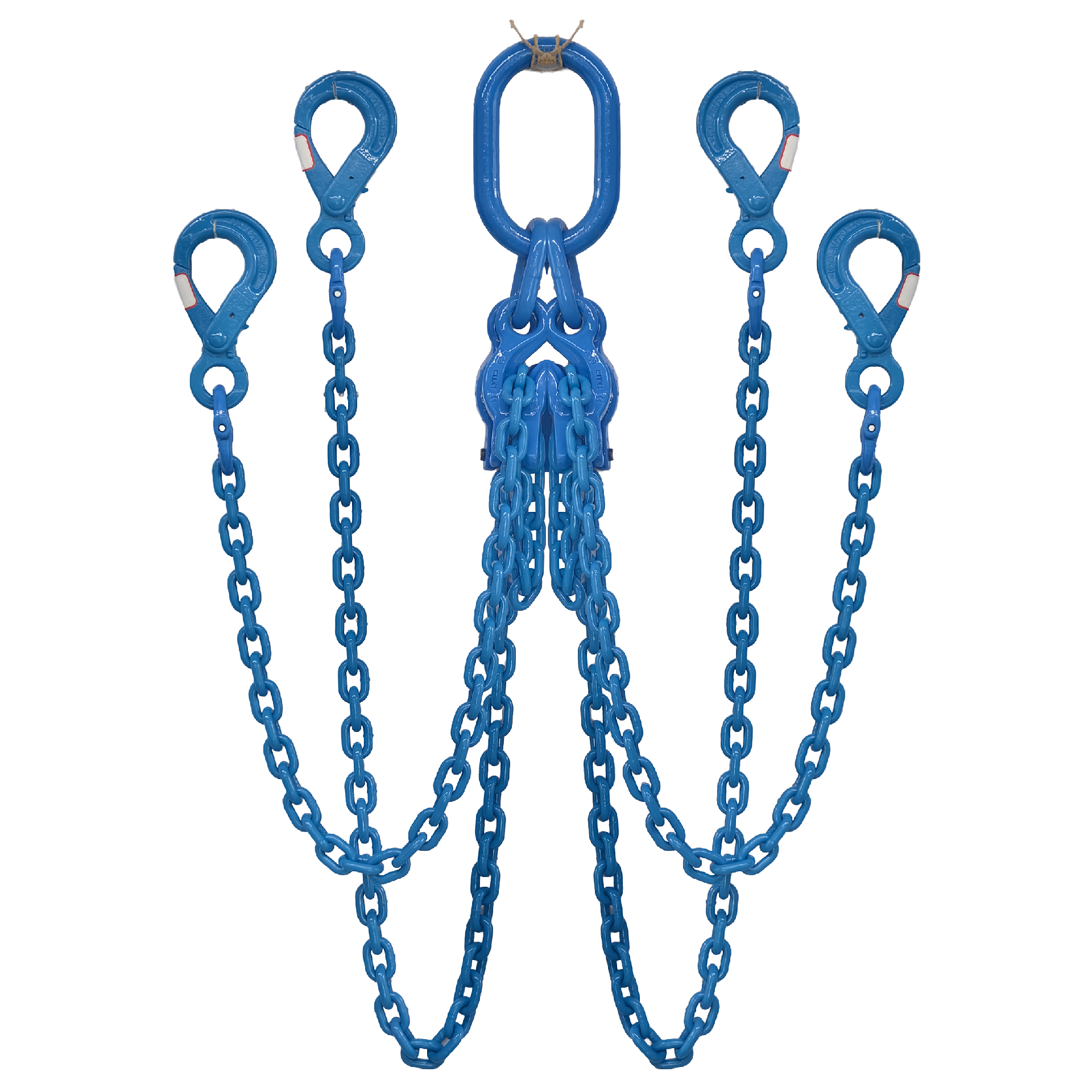
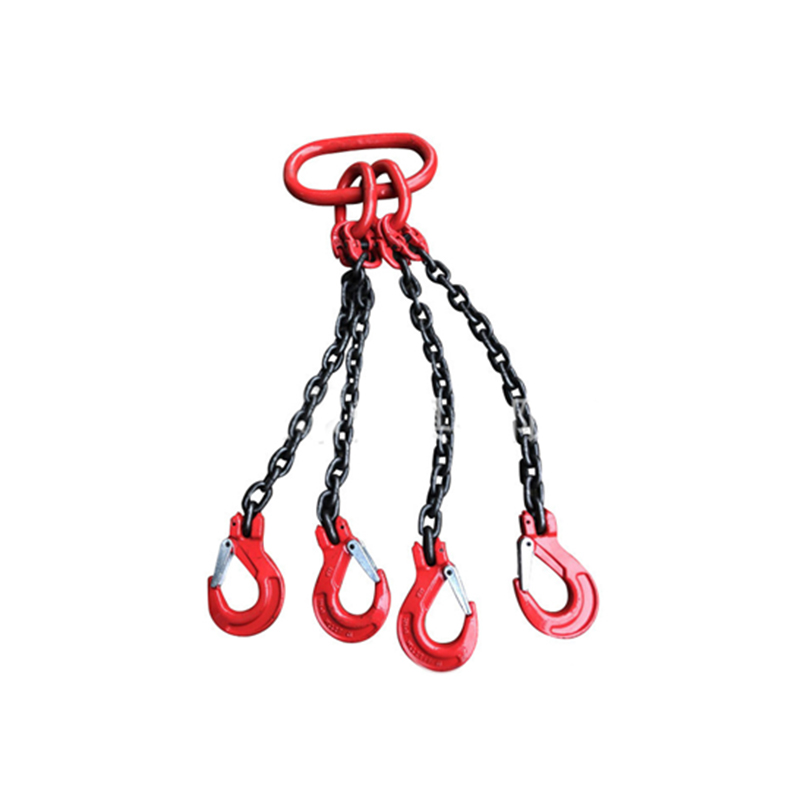
Single-leg chain slings are suitable for loads with an appropriate single lifting point or applications where a direct vertical connection is practical.
Two-leg slings are commonly used for loads with two lifting points and can provide improved load stability.
Three- and four-leg slings can support loads with multiple lifting points, but load distribution should not automatically be assumed to be equal between all legs. For irregular or nonsymmetrical loads, the actual load distribution should be assessed by a qualified person.
The number of legs should therefore be selected according to the load geometry and lifting points, not simply to increase capacity.
How Sling Angle and Hitch Type Affect Capacity
The way the chain sling connects to the load can significantly affect its rated capacity.
Common hitch arrangements include vertical, basket, and choker hitches, as well as multi-leg configurations.
A vertical hitch provides a direct connection between the lifting point and the load. A basket hitch can provide a higher capacity in some rated configurations because the chain supports the load through two sections. A choker hitch wraps around the load and may have a reduced rated capacity depending on the configuration and angle.
The manufacturer's WLL table should always be used for the specific hitch.
Sling Angle
Sling angle is particularly important for two-leg, three-leg, and four-leg slings.
As the angle between the sling legs increases from the vertical position, the tension in each leg increases. This means that a chain sling that is suitable at one angle may not have the same WLL at another angle.
Avoid selecting a sling based on the assumption that each leg carries an equal fraction of the load.
For example, a 10,000 kg load suspended from two nearly vertical legs does not impose the same tension on each leg as the same load lifted with the legs spread widely apart.
The sling angle should therefore be established before the final chain diameter and WLL are selected.
Load Geometry and Center of Gravity
The center of gravity also affects sling selection.
If the lifting points are not positioned symmetrically around the center of gravity, one leg may carry more load than another. A chain sling can therefore have sufficient nominal WLL while the actual arrangement still creates an uneven load distribution.
Before lifting, make sure the load remains stable and the lifting points are suitable for the intended sling configuration.
Sharp edges require additional attention. Concentrated contact between chain links and sharp edges can damage the chain or reduce its effective strength. Appropriate edge protection or a different rigging arrangement may be necessary.
Consider Components, Working Conditions and Standards
A chain sling is only as reliable as its complete load-bearing assembly.
The chain must be compatible with the hooks, master links, connecting links, shortening devices, and other components used in the sling.
For example, installing a higher-capacity chain on a lower-rated hook does not increase the capacity of the complete sling.
When specifying a chain sling, confirm:
Chain grade
Chain diameter
WLL
Number of legs
Reach
Hook type
Master link
Connecting components
Shortening devices
Applicable standard
The working environment should also be considered.
High temperatures can affect alloy steel chain capacity and material properties. Corrosive chemicals, saltwater, moisture, and abrasive conditions can affect chain and component service life.
For applications involving unusual temperatures, corrosive chemicals, offshore exposure, or severe abrasion, consult the manufacturer before selecting the sling.
Applicable Standards
Depending on the market and application, relevant requirements may include:
EN 818-4 — Chain slings for lifting purposes
ASME B30.9 — Slings
OSHA 29 CFR 1910.184 — Slings
OSHA 29 CFR 1926.251 — Rigging equipment for material handling
The applicable standard should be confirmed according to the destination market and intended lifting application.
Proper identification is also important. Lifting chain slings should have appropriate markings and documentation showing information such as size, grade, WLL, reach, and traceability as required by the applicable standard.
Chain Sling Selection Checklist
Before ordering a chain sling, review the following information:
Item | Selection Requirement |
Maximum load | Heaviest intended load |
Load geometry | Shape, lifting points and center of gravity |
Hitch type | Vertical, basket, choker or multi-leg |
Number of legs | 1, 2, 3 or 4 |
Sling angle | Actual operating angle |
Chain grade | Grade 80, Grade 100 or applicable grade |
Chain diameter | Selected according to WLL |
Reach | Required working length |
Hooks | Type and rated capacity |
Master link | Compatible with sling configuration |
Environment | Temperature, chemicals, corrosion and abrasion |
Standard | Applicable regional requirements |
Identification | Size, grade, WLL and traceability |
Providing these details to the manufacturer makes it easier to configure the correct chain sling from the beginning.
Chain Sling Selection: Make the Whole Assembly Fit the Lift
The right chain sling is not necessarily the largest or strongest sling available. It is the sling whose WLL, chain grade, diameter, configuration, components, and dimensions match the actual lifting task.
Start with the load and lifting points. Then establish the hitch, number of legs, and sling angle before selecting the chain grade and diameter. Finally, verify that every component in the assembly is compatible and that the sling is suitable for the working environment.
A useful rule to remember is:
Select the lifting requirement first. Select the chain second.
When these factors are evaluated together, chain sling selection becomes much more straightforward—and the final sling is more likely to perform as intended throughout its working life.