Introduction
Understanding the Grade 100 Clevis Shortening Clutch
The Grade 100 Clevis Shortening Clutch represents a fundamental solution to a persistent challenge in industrial lifting operations: the need to adjust chain sling length without replacing the entire assembly. In many lifting scenarios, standard chain slings are longer than required for specific applications. Rather than purchasing multiple slings of different lengths, operators can use a shortening clutch to temporarily reduce the effective length of an existing sling, improving load control and reducing inventory costs.
However, not all shortening clutches are equivalent. The Grade 100 Clevis Shortening Clutch is engineered specifically for high-performance lifting applications where load capacity, reliability, and safety are non-negotiable requirements.
The Engineering Behind Superior Performance
Heat Treatment: Optimizing Material Properties
After forging, each clutch undergoes precision heat treatment (quenching and tempering) as specified in EN 818-1. This multi-step process transforms the raw alloy steel into a component with optimized mechanical properties:
Austenitizing: The clutch is heated to 850-900°C, dissolving the alloy elements into the iron matrix and creating a uniform microstructure.
Quenching: The heated clutch is rapidly cooled in oil or water, transforming the austenite into martensite—a hard, strong microstructure.
Tempering: The hardened clutch is reheated to 400-500°C, relieving internal stresses and optimizing the balance between strength and toughness.
The result is a component with a surface hardness of approximately 45-50 HRC (Rockwell hardness), providing the optimal combination of strength for load-bearing and toughness for impact resistance.
Precision Forging: Achieving Dimensional Accuracy
The Grade 100 Clevis Shortening Clutch is manufactured through precision forging, a process that shapes the hot steel into the final form under controlled pressure. This forging process:
Creates a grain structure aligned with the load paths, maximizing strength efficiency
Eliminates internal voids and porosity that could be stress concentration points
Produces dimensional accuracy that allows minimal machining, preserving the strength-optimized grain structure
After forging, critical dimensions are precision machined to ensure:
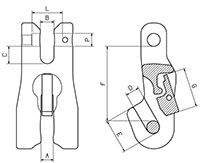
Pocket geometry accuracy: ±0.01 inches (±0.25 mm) to ensure proper chain seating
Clevis head dimensions: ±0.005 inches (±0.13 mm) to ensure compatibility with Grade 100 chain
Latch mechanism clearances: ±0.005 inches (±0.13 mm) to ensure reliable engagement and release
Quality Assurance: 100% Magnaflux Inspection
Every Grade 100 Clevis Shortening Clutch undergoes 100% Magnaflux crack detection before shipment. This non-destructive testing method uses magnetic particles to identify surface and near-surface defects (cracks, inclusions, segregation) that could lead to premature failure. Any component showing evidence of defects is immediately rejected.
Additionally, all load pins are 100% individually inspected and tested to verify dimensional accuracy and material properties.
Why Grade 100 Matters
The Grade 100 designation indicates that this clutch is engineered for the highest performance demands in lifting operations. Compared to Grade 80 alternatives:
25% higher working load limit: A Grade 100 clutch rated for 22,800 lbs can handle loads that would require a Grade 80 clutch rated for 18,200 lbs
Superior fatigue resistance: Grade 100 clutches are fatigue-rated to 1.5 times the working load limit for 20,000 cycles, compared to lower fatigue ratings for Grade 80
Better material properties: The alloy composition and heat treatment create superior strength, toughness, and wear resistance
This performance advantage is particularly valuable in applications involving:
Repeated load cycling (where fatigue resistance is critical)
High-speed lifting (where dynamic forces exceed static load calculations)
Harsh environments (where corrosion and wear resistance are essential)
Critical safety applications (where margin for error must be maximized)
Design Features That Enhance Safety and Reliability
The Pocket Design: Distributed Load Bearing
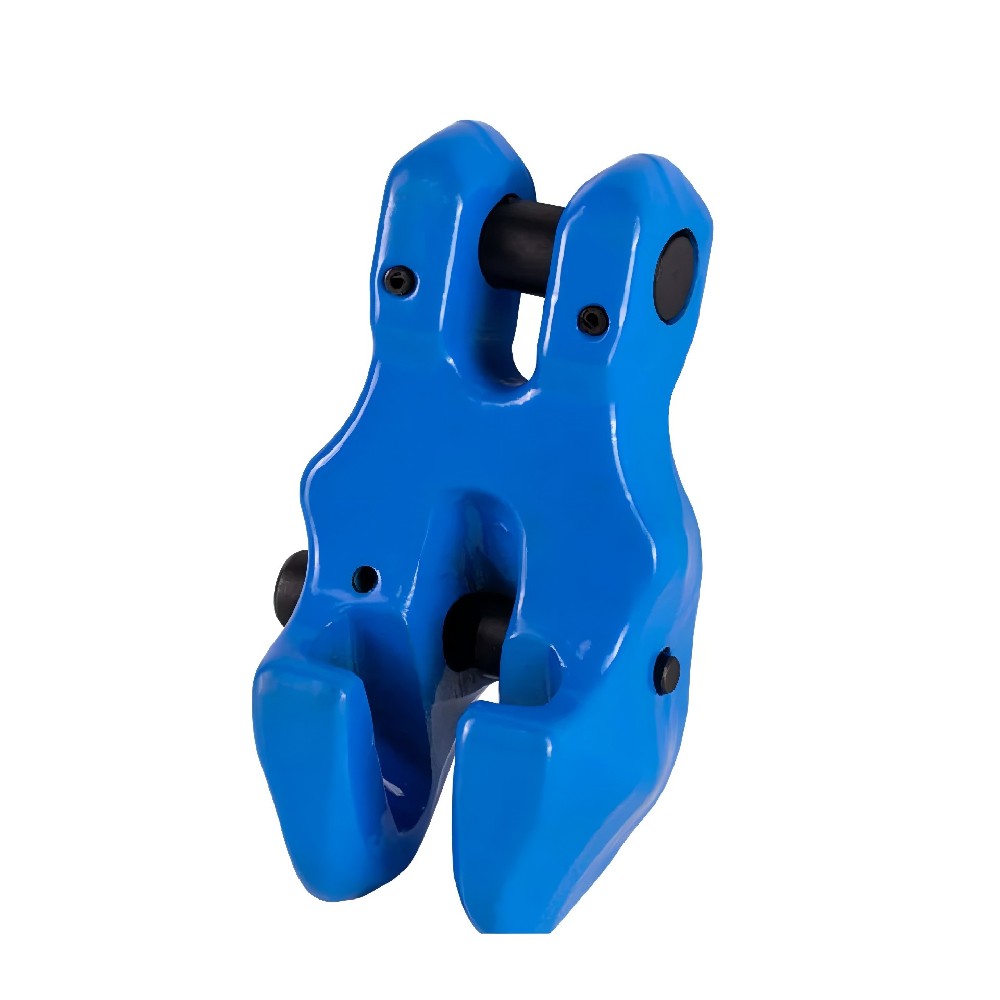
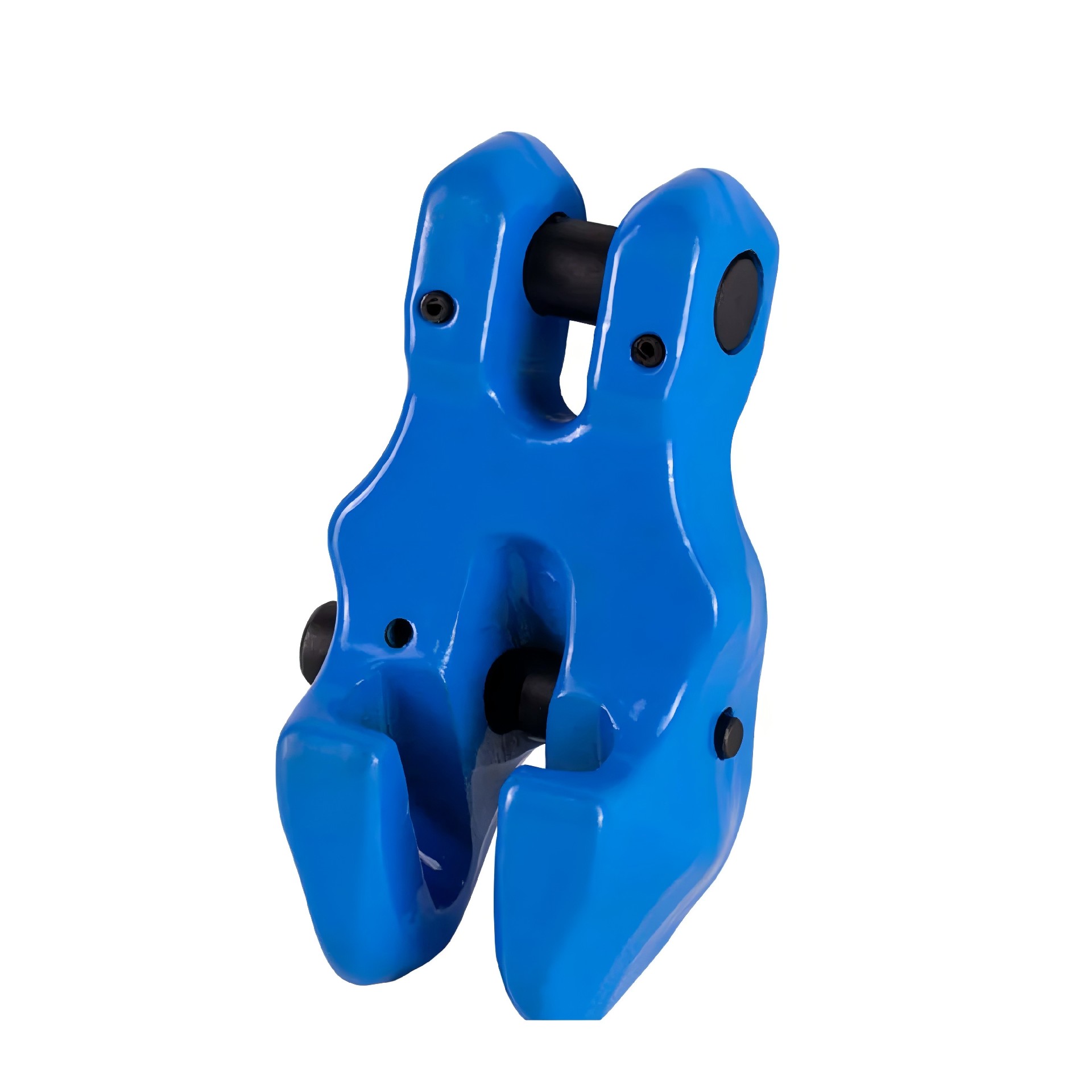
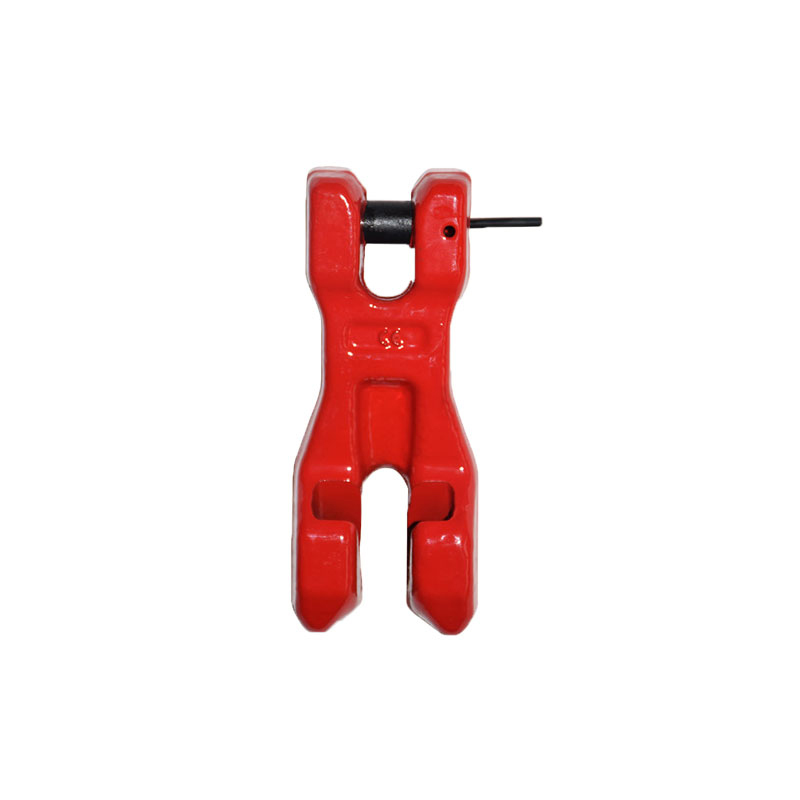
The most distinctive feature of the Grade 100 Clevis Shortening Clutch is its engineered pocket. Unlike simpler designs that rely on a single contact point, the pocket creates a distributed bearing surface that:
Distributes load evenly: The curved pocket geometry spreads the load across a larger surface area, reducing peak stresses
Ensures proper chain seating: The pocket geometry is precisely engineered to match the chain link profile, ensuring the chain seats fully and securely
Prevents chain rotation: The pocket prevents the chain from rotating or twisting, which could cause binding or uneven load distribution
Allows in-line pull: The pocket geometry is designed so that the pull force is transmitted directly along the chain axis, without lateral forces that could cause the chain to slip
This distributed load-bearing design is why Grade 100 Clevis Shortening Clutches outperform simpler designs: the load is distributed across a larger area, reducing stress concentrations and extending service life.
The Integrated Clevis Head: Preventing Incompatibility
The clevis head is permanently attached to the clutch body, not a separate component that could be mixed with incompatible hooks. This design eliminates a critical safety hazard: the possibility of using an incompatible hook with a Grade 100 chain, which could result in:
Slippage during loading: An incompatible hook might slip on the chain, causing sudden load drops
Uneven load distribution: Incompatible geometries can concentrate load at a single point, exceeding the chain's capacity
Unexpected failure: Incompatible combinations might pass initial inspection but fail under dynamic loading
By integrating the clevis head directly into the clutch, TopOne Chain ensures that every shortening clutch is compatible with Grade 100 chain systems.
The Built-in Latch: Passive Safety
The latch mechanism is a passive safety feature that requires no operator action to function. When the chain is seated in the pocket, the latch automatically engages, preventing disengagement. When the load is removed and the chain is lifted from the pocket, the latch automatically releases.
This passive design is superior to designs requiring operator intervention because:
No operator error: The latch cannot be forgotten or improperly engaged
Automatic operation: The latch functions without requiring additional steps or tools
Reliable engagement: The latch is always engaged when the chain is in the pocket, regardless of how the clutch is oriented
Performance Characteristics
The Grade 100 Clevis Shortening Clutch is engineered to deliver consistent, reliable performance across a wide range of operating conditions:
Working load limit: Ranges from 3,000 lbs (for 7/32" chain) to 35,300 lbs (for 3/4" chain)
Fatigue rating: 1.5 times working load limit for 20,000 cycles
Proof load: 2.5 times working load limit (100% tested on every unit)
Safety factor: 4:1 (minimum breaking force is 4 times the working load limit)
Temperature range: -20°C to +80°C (-4°F to +176°F)
Corrosion resistance: Powder coat finish provides protection in harsh environments
Recommended Applications
The Grade 100 Clevis Shortening Clutch is ideal for:
Adjustable sling length: Temporarily shorten chain slings for different load heights
Load control: Improve load positioning and control by adjusting sling geometry
Inventory optimization: Reduce the number of different sling lengths required in inventory
Retrofit applications: Add shortening capability to existing chain slings without replacement
High-cycle operations: Applications requiring repeated load cycling where fatigue resistance is critical
Safety-critical lifting: Applications where load capacity margin and reliability are paramount
Standards
International Standards Compliance
The Grade 100 Clevis Shortening Clutch is engineered and manufactured in full compliance with the following international standards:
ASTM A952 - Standard Specification for Chain, Welded, Double Loop, Alloy Steel, for Lifting
ASTM A952 is the primary American standard governing Grade 100 chain systems and related components. This standard specifies:
Material Requirements:
Alloy steel composition with specific carbon, chromium, nickel, and molybdenum content ranges
Strict limits on impurities (sulfur, phosphorus) to ensure consistent material properties
Fully killed steel (deoxidized with aluminum) to eliminate gas porosity
Manufacturing Requirements:
Precision forging to create optimized grain structure
Heat treatment (quenching and tempering) to achieve required hardness and toughness
Dimensional tolerances to ensure compatibility with chain systems
Surface finish specifications for corrosion protection
Testing Requirements:
Proof load testing to 2.5 times working load limit
Tensile testing to verify minimum breaking force
Hardness verification (45-50 HRC)
100% inspection for surface defects
Design Factor:
Minimum 4:1 design factor (minimum breaking force must be 4 times the working load limit)
The Grade 100 Clevis Shortening Clutch meets or exceeds all requirements specified in ASTM A952 Section 3 (Material), Section 5 (Dimensions), and Section 6 (Testing).
EN 1677-1 - Lifting Accessories - Safety Requirements for Shortening Clutches
EN 1677-1 is the European standard specifically governing shortening clutches for lifting applications. This standard establishes:
Safety Requirements:
Minimum 4:1 design factor
Proof load testing to 2.5 times working load limit
100% Magnaflux crack detection
Fatigue rating of at least 1.5 times working load limit for 20,000 cycles
Material Requirements:
High-tensile alloy steel meeting DIN 17115 specifications
Controlled chemical composition
Specified heat treatment parameters
Testing and Certification:
Individual proof load testing
100% inspection of all load-bearing components
Material certification for each batch
Test reports and documentation
Dimensional Specifications:
Precise pocket geometry to ensure proper chain seating
Clevis head dimensions for compatibility with Grade 100 chain
Latch mechanism specifications for reliable engagement
The Grade 100 Clevis Shortening Clutch fully complies with all requirements specified in EN 1677-1.
DIN 17115 - Steel for Welded Round Steel Link Chains - Technical Conditions of Delivery
DIN 17115 is the German material standard that specifies the alloy steel composition for chain applications. This standard requires:
Material Composition:
Fully killed steel (deoxidized with aluminum)
Fine-grain structure achieved through controlled rolling and heat treatment
Specific alloy content: Carbon (0.35-0.45%), Chromium (0.5-0.8%), Nickel (0.3-0.6%), Molybdenum (0.15-0.25%)
Strict impurity limits: Sulfur and phosphorus ≤ 0.035% each
Quality Assurance:
Material certification with certified mill test reports
Chemical analysis verification
Mechanical property testing
The steel used in Grade 100 Clevis Shortening Clutches meets or exceeds all DIN 17115 specifications, with full material certification provided.
EN 818-1 - Short Link Chain for Lifting Purposes — Safety — Part 1: General Conditions of Acceptance
EN 818-1 establishes the general requirements for chain manufacturing, including heat treatment and quality control procedures. Key provisions relevant to shortening clutches include:
Heat Treatment Specifications:
Austenitizing temperature: 850-900°C
Quenching medium: Oil or water
Tempering temperature: 400-500°C
Target hardness: 45-50 HRC
Quality Control:
100% proof load testing
Hardness verification
Surface inspection for defects
Material certification
The Grade 100 Clevis Shortening Clutch manufacturing process follows EN 818-1 specifications for heat treatment and quality control.
Certification and Testing
100% Proof Load Testing
Every Grade 100 Clevis Shortening Clutch undergoes individual proof load testing to verify structural integrity. The proof load is set at 2.5 times the clutch's working load limit. For example:
5/8" Grade 100 clutch (WLL: 22,800 lbs) → Proof load: 57,000 lbs
3/4" Grade 100 clutch (WLL: 35,300 lbs) → Proof load: 88,250 lbs
This non-destructive test is designed to expose any hidden material defects, forging flaws, or manufacturing defects that could lead to premature failure. Any clutch showing permanent deformation or other signs of failure is immediately rejected.
100% Magnaflux Crack Detection
Every Grade 100 Clevis Shortening Clutch undergoes 100% Magnaflux inspection before shipment. This non-destructive testing method uses magnetic particles to identify:
Surface cracks: Defects on the component surface
Near-surface defects: Inclusions, segregation, or other subsurface flaws
Stress concentration points: Areas where stress could concentrate during operation
Any component showing evidence of defects is immediately rejected. This comprehensive inspection ensures that only defect-free clutches reach customers.
100% Pin Inspection and Testing
All load pins are 100% individually inspected and tested to verify:
Dimensional accuracy: Diameter and length within specified tolerances
Material properties: Hardness and surface finish
Surface condition: No cracks, corrosion, or damage
Functional performance: Smooth rotation and proper seating
Material Certification
Each Grade 100 Clevis Shortening Clutch includes a material certification document that verifies:
Chemical composition: Certified analysis confirming compliance with ASTM A952 and DIN 17115
Mechanical properties: Tensile strength, yield strength, elongation, and impact toughness
Heat treatment parameters: Documentation of quenching and tempering temperatures
Hardness verification: Surface hardness measurements confirming 45-50 HRC range
Design Factor and Safety
The Grade 100 Clevis Shortening Clutch maintains the 4:1 design factor that is fundamental to Grade 100 lifting components. This design factor means:
The clutch's certified minimum breaking force is at least 4 times its working load limit
The clutch is engineered to support this 4:1 safety margin under all normal operating conditions
When properly installed and used, a Grade 100 clutch will perform at the same safety level as Grade 100 chain
Example - 5/8" Grade 100 Clutch:
Working Load Limit: 22,800 lbs
Minimum Breaking Force: ≥ 91,200 lbs (4 × WLL)
Proof Load (tested on every unit): 57,000 lbs (2.5 × WLL)
Safety Margin: 91,200 ÷ 22,800 = 4:1
Fatigue Performance
The Grade 100 Clevis Shortening Clutch is fatigue-rated to 1.5 times the working load limit for 20,000 cycles. This specification is critical for applications involving repeated load cycling:
High-cycle lifting operations: Applications where loads are lifted and lowered repeatedly
Repetitive material handling: Conveyor systems, assembly lines, and similar applications
Dynamic loading: Applications where loads are accelerated or decelerated rapidly
This fatigue rating ensures that the clutch will maintain its structural integrity even under repeated loading that would exceed the static working load limit.
Regulatory Compliance
The Grade 100 Clevis Shortening Clutch is designed for use in lifting applications that are subject to regulatory oversight in many jurisdictions:
United States:
OSHA 29 CFR 1910.184: Slings and Rigging Hardware
ANSI B30.20: Shortening Clutches
ASTM A952: Chain for Lifting
Canada:
CSA B335: Safety Code for Rigging
CSA B335.0: General Requirements
European Union:
2006/42/EC: Machinery Directive
EN 1677-1: Shortening Clutches
EN 818-1: Chain Manufacturing
Australia:
AS 1418.1: Cranes, Hoists and Winches
AS 1418.7: Lifting Attachments
China:
GB/T 3077: Alloy Steel for Lifting
GB/T 5972: Lifting Chain
Compatibility and Recommendations
Recommended Use:
The Grade 100 Clevis Shortening Clutch is designed specifically for use with Grade 100 chain and Grade 100 lifting components
Always match the clutch size to the chain size (e.g., 5/8" clutch with 5/8" chain)
Do not use Grade 100 clutches with Grade 80 or lower-grade chains, as this may result in incompatibility and potential safety hazards
Not Recommended:
Do not use Grade 100 clutches with chains of different grades or sizes
Do not use Grade 100 clutches with non-certified or non-standard chain components
Do not exceed the working load limit under any circumstances
Maintenance and Inspection
Regular Inspection:
Inspect the clutch before each use for visible damage, cracks, or corrosion
Verify that the latch mechanism operates smoothly
Check that the powder coat finish is intact
Maintenance:
Clean the clutch regularly to remove dirt, debris, and corrosion
Apply a light coat of oil to prevent rust in humid environments
Store in a dry location when not in use
Replacement:
If the clutch shows signs of damage, cracking, or permanent deformation, it must be replaced immediately
Do not attempt to repair a damaged clutch; replacement is the only safe option
Documentation and Certification
Each Grade 100 Clevis Shortening Clutch is supplied with:
Material Certification: Verifying compliance with ASTM A952 and DIN 17115
Test Report: Documenting proof load testing and inspection results
Dimensional Verification: Confirming all dimensions are within specification
Magnaflux Report: Documenting 100% crack detection inspection
Compliance Documentation: Verifying compliance with applicable standards and regulations
This comprehensive documentation provides procurement managers and safety officers with the verification needed for regulatory compliance and risk management.