How to Choose a Chain Block
When selecting a chain block, consider these six factors together:
Selection Factor | What You Need to Determine |
Load Weight | Maximum weight that will actually be lifted |
Chain Block Capacity | Required rated working load limit |
Lifting Height | Vertical distance the load needs to travel |
Headroom | Available space between the suspension point and load |
Suspension Type | Hook-mounted, fixed trolley, or geared trolley |
Working Conditions | Frequency of use and operating environment |
Ignoring any one of these factors can result in a chain block that technically has enough capacity but does not work efficiently in the actual application.
1. Determine the Maximum Load Weight
The first step in learning how to choose a chain block is identifying the maximum load that the equipment will lift.
Never select a chain block with a rated capacity below the actual load.
For example, if your load weighs 1,600 kg, a 1 ton chain block is not suitable. You would need to move to a chain block with a working load limit that safely covers the load.
Common chain block capacities include:
Chain Block Capacity | Typical Selection Range |
0.5 Ton | Light maintenance and assembly |
1 Ton | Workshops and light industrial lifting |
2 Ton | Machinery maintenance and installation |
3 Ton | Medium industrial equipment |
5 Ton | Heavy machinery and industrial lifting |
10 Ton and Above | Heavy engineering and specialized lifting |
These application examples are general guidance rather than fixed rules. The actual selection must always be based on the load, lifting arrangement, manufacturer specifications, and operating conditions.
Do Not Choose Capacity Based Only on the Average Load
Suppose most loads in your workshop weigh around 1 ton, but some equipment weighs 1.8 tons.
A 1 ton chain block would not be appropriate simply because most lifting operations remain below one ton. Selection should account for the maximum intended load, not the average load.
The rated capacity or WLL marked on the chain block must never be exceeded.
2. Choose the Correct Chain Block Capacity
Once you know the maximum load, select a chain block with an adequate rated capacity.
The key specification is the Working Load Limit (WLL). It represents the maximum load that the chain block is rated to handle under the manufacturer's specified operating conditions.
For example:
Load weight: 1,500 kg
A 1 ton chain block is insufficient because the load exceeds its rated capacity.
A 2 ton chain block provides the required rated capacity, assuming the rest of the lifting system and operating conditions are also suitable.
However, choosing a dramatically oversized chain block is not always necessary. Higher-capacity models are generally heavier and may require greater pulling effort, larger components, and more installation space.
The goal is to select the appropriate capacity for the intended lifting operation rather than simply choosing the largest available model.
3. Determine the Required Lifting Height
Capacity tells you how much the chain block can lift. Lifting height tells you how far it can lift the load.
This is another specification that buyers sometimes overlook.
Common lifting heights may include:
3 m
6 m
9 m
12 m
Longer lifting heights can also be configured depending on the chain block design and application.
Consider a workshop where the lifting point is 6 meters above the floor. A standard chain block supplied with only 3 meters of lifting height may have sufficient capacity but still be unusable for the job.
Before ordering, determine the vertical distance between the required upper and lower load positions.
You should also distinguish between lifting height and hand chain length. They are related to the installation but describe different parts of the chain block.
4. Check the Available Headroom
Headroom becomes particularly important when working inside factories, workshops, ships, maintenance areas, or other locations with restricted vertical space.
The headroom of a chain block is generally the distance between the upper suspension point and the lower hook when the hook is raised to its highest practical position.
A chain block with excessive headroom consumes valuable vertical lifting space.
Imagine that a load needs to be raised close to an overhead beam. Even if the chain block provides enough lifting height, its physical dimensions may prevent the load from reaching the required position.
For applications with limited vertical clearance, compare the minimum headroom dimensions of available models before purchasing.
5. Select the Right Suspension Type
The next question is whether the chain block needs to lift from one fixed position or move horizontally along a beam.
Hook-Suspended Chain Block
A hook-suspended chain block is suitable when lifting takes place at a fixed location.
The upper hook connects to an appropriate supporting or suspension point. This configuration is simple and widely used for maintenance, installation, and general workshop lifting.
Chain Block with Plain Trolley
A plain trolley allows the chain block and suspended load to travel horizontally along a suitable beam.
The operator moves the trolley by pushing or pulling the suspended load, subject to the trolley manufacturer's instructions and the lifting arrangement.
It can be useful when loads need both vertical lifting and short horizontal movement.
Chain Block with Geared Trolley
A geared trolley uses a hand chain to control horizontal trolley movement.
This configuration can provide more controlled positioning, particularly where pushing the load directly is difficult or inappropriate.
Before selecting a trolley-mounted chain block, verify beam dimensions and trolley compatibility rather than choosing the trolley solely according to lifting capacity.
6. Consider How Often the Chain Block Will Be Used
A chain block used occasionally for maintenance does not experience the same operating demands as one used repeatedly throughout a production shift.
Consider:
How many lifts will be performed?
How heavy are the normal loads compared with the rated capacity?
How far will each load travel?
How frequently will the chain block operate?
Frequent or demanding lifting applications require closer attention to the manufacturer's duty classification, inspection requirements, component design, and maintenance recommendations.
If lifting operations are extremely frequent, a manual chain block may also become inefficient. An electric chain hoist or another powered lifting system may be more appropriate.
7. Evaluate the Working Environment
Environmental conditions can significantly affect chain block selection and service life.
A standard chain block used in a clean indoor workshop operates under very different conditions from lifting equipment exposed to moisture, dust, chemicals, salt, high temperatures, or outdoor weather.
Before choosing a chain block, identify whether the application involves:
Outdoor operation – Consider exposure to rain, moisture, and corrosion.
Marine environments – Saltwater and humid air can increase corrosion risks.
Dusty workplaces – Mining, construction, cement, and similar industries may require more frequent inspection and maintenance.
Corrosive environments – Chemical plants and other aggressive environments may require specially selected materials or protective measures.
Extreme temperatures – Verify the permitted operating temperature with the manufacturer.
Do not assume that a standard chain block can be used in every environment simply because its lifting capacity is sufficient.
8. Check the Load Chain and Components
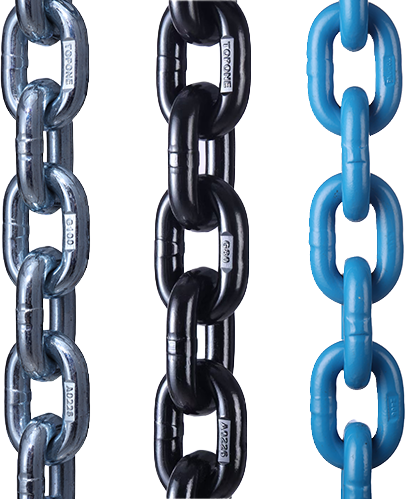
The load chain is a critical load-bearing component of a chain block.
When comparing chain blocks, examine the manufacturer's specifications for the load chain, hooks, braking mechanism, gears, and other load-bearing components.
The load chain must match the chain block design. Never replace it with an ordinary general-purpose chain or an unapproved chain of similar dimensions.
You should also check whether the chain block provides appropriate identification and traceability information according to the applicable product requirements.
9. Check Applicable Standards
Standards can vary according to the chain block design and target market.
For manually operated chain hoists sold into different markets, manufacturers may design, test, and document their products according to applicable regional or international requirements.
Examples relevant to manual chain hoists can include EN 13157 for hand-powered lifting equipment and ASME B30.16 for overhead underhung and stationary hoists.
The applicable standard should be confirmed according to the product, market, installation, and intended use.
Do not judge a chain block only by its appearance or rated tonnage. Ask the manufacturer or supplier for the applicable technical specifications, testing information, operating instructions, and product documentation.
Click to select the product that suits you.
Frequently Asked Questions
What size chain block do I need?
Choose a chain block whose rated Working Load Limit is sufficient for the maximum intended load. Do not select capacity based only on the average load. Lifting height, headroom, suspension, environment, and operating frequency must also be considered.
Is a 1 ton chain block enough for a 1 ton load?
A chain block must never be used above its rated WLL. Whether a specific 1 ton chain block is appropriate for a particular 1 ton lifting operation also depends on the manufacturer's instructions, lifting arrangement, condition of the equipment, and other application factors.
Should I choose a 2 ton or 3 ton chain block?
Start with the maximum intended load. If both capacities are sufficient, compare the lifting arrangement, dimensions, weight, required operating effort, headroom, duty requirements, and manufacturer specifications before deciding.
What lifting height should I choose?
Choose a lifting height that covers the required vertical movement between the lowest and highest load positions. Measure the actual installation before ordering rather than assuming the standard chain length will be sufficient.
What is the difference between a chain block and a chain hoist?
“Chain hoist” is a broader term that can refer to lifting equipment using a chain, including manual and powered designs. “Chain block” commonly refers to a manually operated hand chain hoist. Terminology can vary by market and manufacturer.
Final Thoughts
Understanding how to choose a chain block starts with six basic questions: how heavy is the load, how high must it travel, how much headroom is available, whether horizontal movement is required, how frequently the equipment will operate, and what environmental conditions it will face.
Capacity is important, but it should never be the only selection criterion.
For industrial buyers, a properly selected chain block should combine the correct Working Load Limit, lifting height, suspension configuration, load chain, headroom, and operating suitability for the intended application.
TOPONE supplies chain block and lifting chain solutions for industrial lifting applications. Contact us with your required capacity, lifting height, suspension method, and operating conditions to discuss a suitable configuration.