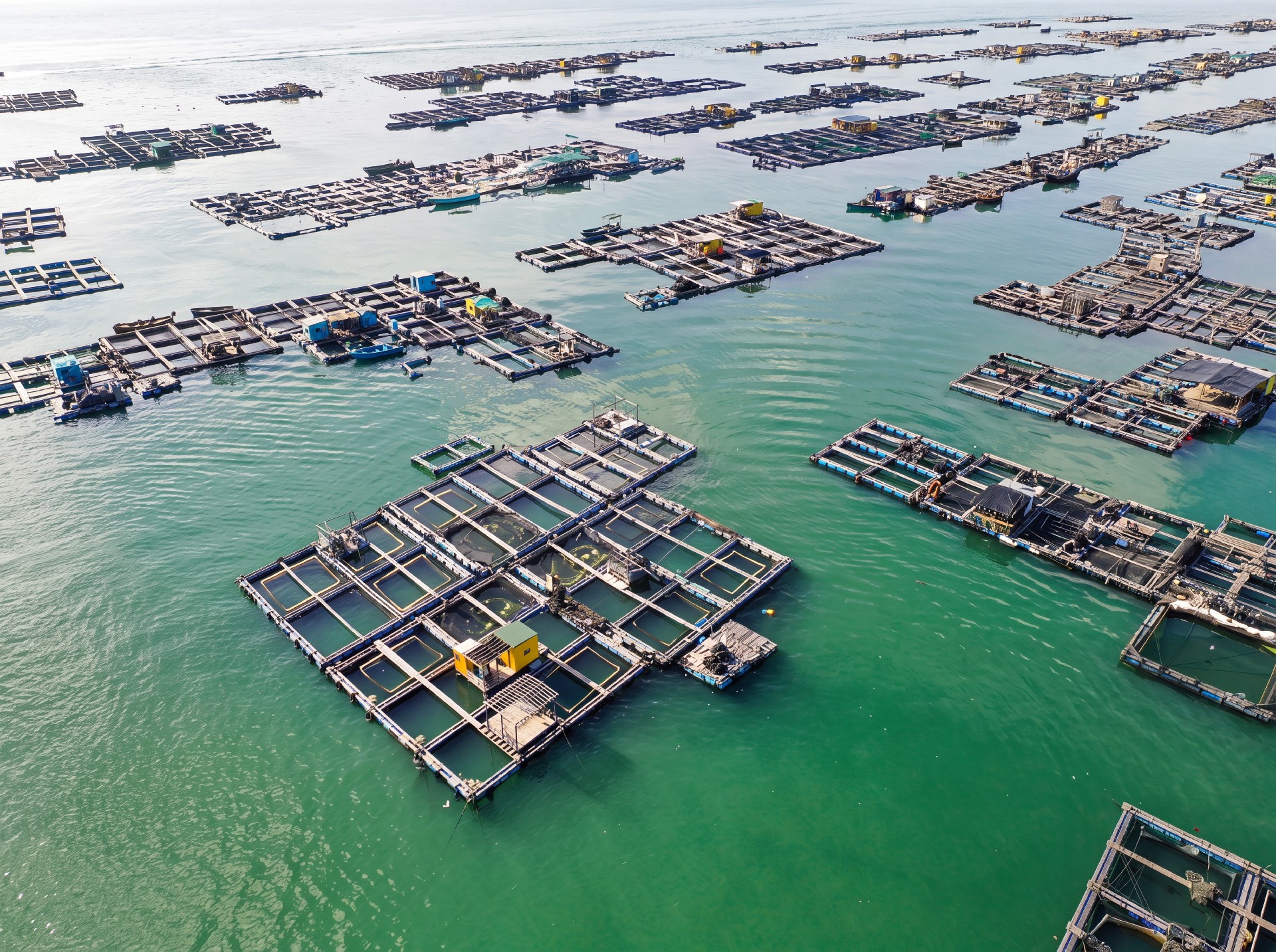
Aquaculture moorings position cages, grids and feeding platforms under wind, wave, current and tidal loads. They must limit movement without overloading nets or floaters. Permanent moorings and net-handling lifting equipment are separate systems.
Engineering Design Basis
Site Loads and Analysis
Design starts with water depth, seabed soil, tide, current, wind, waves and extreme combinations. Current drag on netting can dominate cage load and changes with net deformation and marine growth. Analysis follows the load path from nets and floaters through grid lines, mooring legs, chain, connectors and anchors.
ISO 16488:2015 requires floating structures, nets and mooring equipment to be evaluated for the specified environment and risk. NS 9415:2021+AC:2024 covers site survey, component interaction, loads, resistance, anchoring and maintenance. Ultimate, fatigue and accidental conditions follow the governing standard.
Project-Specific Chain Selection
Cage diameter or water depth cannot select a chain alone. Capacity depends on line geometry, pretension, load sharing, rope stiffness, submerged weight, corrosion allowance and fatigue life. Damaged conditions matter because one failed connection can transfer load to adjacent lines.
Mooring Arrangement
Cage Grids and Anchor Legs
A grid connects cages to perimeter and internal lines. Synthetic rope suits sections requiring low submerged weight and compliance. Chain can add catenary weight, resist seabed abrasion and provide anchor connections. Shackles, swivels and rope interfaces must match the load and articulate freely.
Chain must not contact collars, nets or feed hoses. Touchdown zones require wear checks. Anchor selection follows seabed holding-capacity calculations and installation verification, not mass alone.
Platforms and Handling Equipment
Feed barges require separate mooring analysis or a coupled model when connected to the cage grid. Hoses and cables need clearance throughout the calculated offset.
Net changing uses certified lifting chains or slings selected by WLL and geometry. Mooring capacity is not lifting WLL, and lifting-chain data cannot be used for permanent mooring without verification.
TOPONE Mooring Components
Catalogue Range
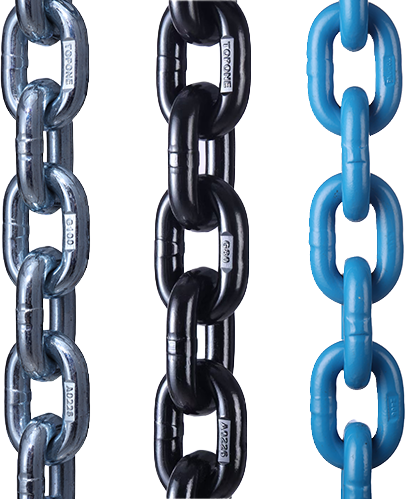
The TOPONE catalogue lists Grade I, II and III stud-link and studless marine anchor chains from 6–107 mm, buoy chain from 8–53 mm, swivels from 6–107 mm, joining and end shackles from 13–65 mm, and non-standard anchor-chain components from 13–70 mm. Interfaces include common, enlarged and end links, joining shackles, anchor swivel shackles, buoy shackles and pear-shaped links.
These ranges show manufacturing capability, not approved aquaculture capacity. Selection requires design tension, minimum breaking load, fatigue requirement, link geometry, submerged weight, articulation, corrosion allowance and certificate scope. Catalogue loads cannot be transferred directly to cage moorings.
Materials and Quality Control
Steel, Corrosion and Testing
Steel grade, heat treatment and dimensions must match the design. Galvanizing, coating or cathodic-protection compatibility should suit the exposure zone. Stainless chain remains uncoated; contact with carbon steel needs a galvanic-corrosion assessment.
Purchase documents should define link welding, dimensional checks, applicable heat treatment, proof and breaking tests, weld inspection, marking and traceability. Shackles and swivels need compatible pins and locking devices.
Inspection and Maintenance
Underwater Integrity
Inspect diameter loss, interlink wear, elongation, welds, twisted links, shackle pins, swivels, rope chafe and splices. ROV or diver surveys should check anchor movement, seabed abrasion, grid geometry, crossed lines, cage contact and marine growth. Compare measurements with design allowances and retirement limits.
Inspect after storms, vessel contact, abnormal offset or component failure. Replacement parts with different length, stiffness or submerged weight can alter load sharing and need review.
Information Required
Provide metocean and seabed data; cage, grid and platform layout; line geometry and pretension; design tensions and fatigue data; chain-rope interfaces; anchor loads; corrosion system; service life, standards and certificates.
ISO 16488:2015 covers open-net marine finfish farms. NS 9415:2021+AC:2024 is the latest Norwegian floating-aquaculture standard. DNV-OTG-24 addresses fish-control integrity. Final sizing remains site-specific.