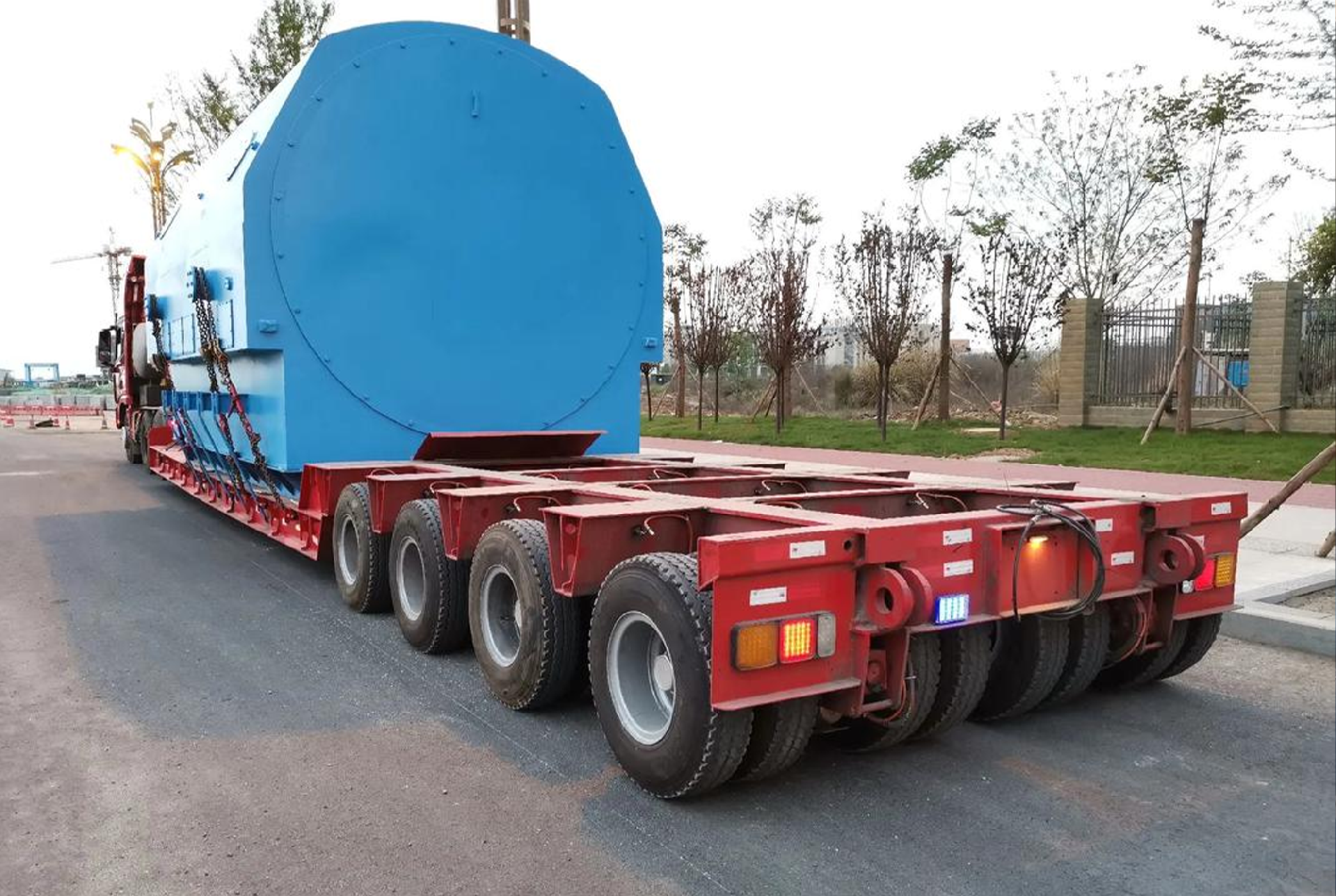
SPMTs move refinery modules, offshore sections, industrial skids and steel assemblies weighing hundreds or thousands of tonnes. Restraint must control sliding, rotation and tipping during acceleration, braking, steering, gradients, camber and wind. The module, grillage, deck, lashing points and route form one engineered system.
Engineering Basis
Load and Stability
The transport file must state gross mass, centre of gravity and uncertainty, dimensions, allowable point loads, supports and rated lashing points. Route data covers gradients, camber, ground-bearing limits, bridges, culverts, turning clearance and wind limits.
The ESTA SPMT guide limits first-degree calculations to 75% of theoretical transporter capacity with a minimum 9° tipping angle. Second-degree values are 90% and 7°, with wind, inertia, slope, deformation and lashing effects calculated. Both checks add 2° to measured gradient or camber. Complex module moves normally require second-degree engineering and approval.
Restraint Force
Restraint starts with F = m × a. If an approved study assigns 0.10g longitudinal acceleration to a 1,000 t module, inertial force is 981 kN before project factors. Gradient, wind and rotation are added in their applicable directions.
For normal EU road transport, Directive 2014/47/EU requires restraint against 0.8 times cargo weight forward and 0.5 times cargo weight laterally and rearward. These are not automatic design accelerations for a controlled low-speed SPMT route; the permit and approved method statement govern.
Restraint System
LC Is Not Lifting WLL
European transport lashing is selected by lashing capacity, LC. Standard tension force, STF, is used mainly for frictional top-over calculations. A lifting sling WLL cannot replace LC without documented equivalence. North American tiedown rules use WLL, with the weakest chain, connector, tensioner or anchor governing.
Direct lashing normally suits very heavy modules better than top-over lashing. Only the chain-force component in the required direction provides restraint. A chain at 60° to that direction contributes LC × cos 60°, or 50% of LC. Three-dimensional geometry must be calculated.
Chain and Binder Selection
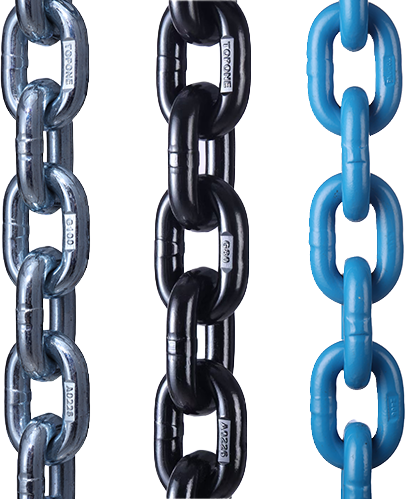
TOPONE’s catalogue includes G70 binder chains, G80 binder or tow chains, and lever- and ratchet-type load binders. Specify grade, diameter, LC or jurisdictional WLL, length, fittings, binder range, proof data, identification and certification. Chain and binder capacities must match; mixed or unidentified parts cannot receive the strongest component’s rating.
Chains are arranged in opposed longitudinal and transverse pairs between rated module points and marked SPMT lashing points. ESTA requires lashing and lifting points to be distinguished and their allowable forces documented. Handrails, piping, cable trays and unverified padeyes are not anchors. Hooks must seat correctly, binders must be secured against release, and extension bars are prohibited unless designed for the tensioner.
Blocking and Friction
Engineered stops, grillage, blocking and rated friction materials can share restraint demand after their compression, shear, weld and deck capacities are verified. Friction may be credited only from a documented coefficient for the actual dry, wet or contaminated interface. Lashings cannot correct unstable supports or insufficient tipping margin.
Transport Control
Tensioning and Monitoring
Apply tension in a defined sequence to prevent module shift or single-anchor overload. Recheck after initial movement, the first turn, gradient changes and any emergency stop because settlement can reduce tension. Level, suspension stroke, axle loads, weather and clearance remain monitored. ESTA recommends operation near 50% suspension stroke unless engineering states otherwise.
Inspection
Confirm identification, LC or WLL, grade, binder compatibility, hooks and anchors before use. EN 12195-3-based guidance treats cracks, deformation, elongation above 3% or wear above 10% of nominal chain diameter as replacement criteria. Remove deformed, split, heavily worn or corroded connectors and tensioners. Never use knots, bolts, field welds or improvised repair links.
Information Required by TOPONE
Provide mass, centre of gravity, support and lashing drawings, approved accelerations, gradients, camber, wind limit, friction basis, chain geometry, standard and certification scope. TOPONE can then configure chains, hooks and binders for the calculated forces. Vessel load-out needs a separate marine analysis; land calculations do not cover sea motion.