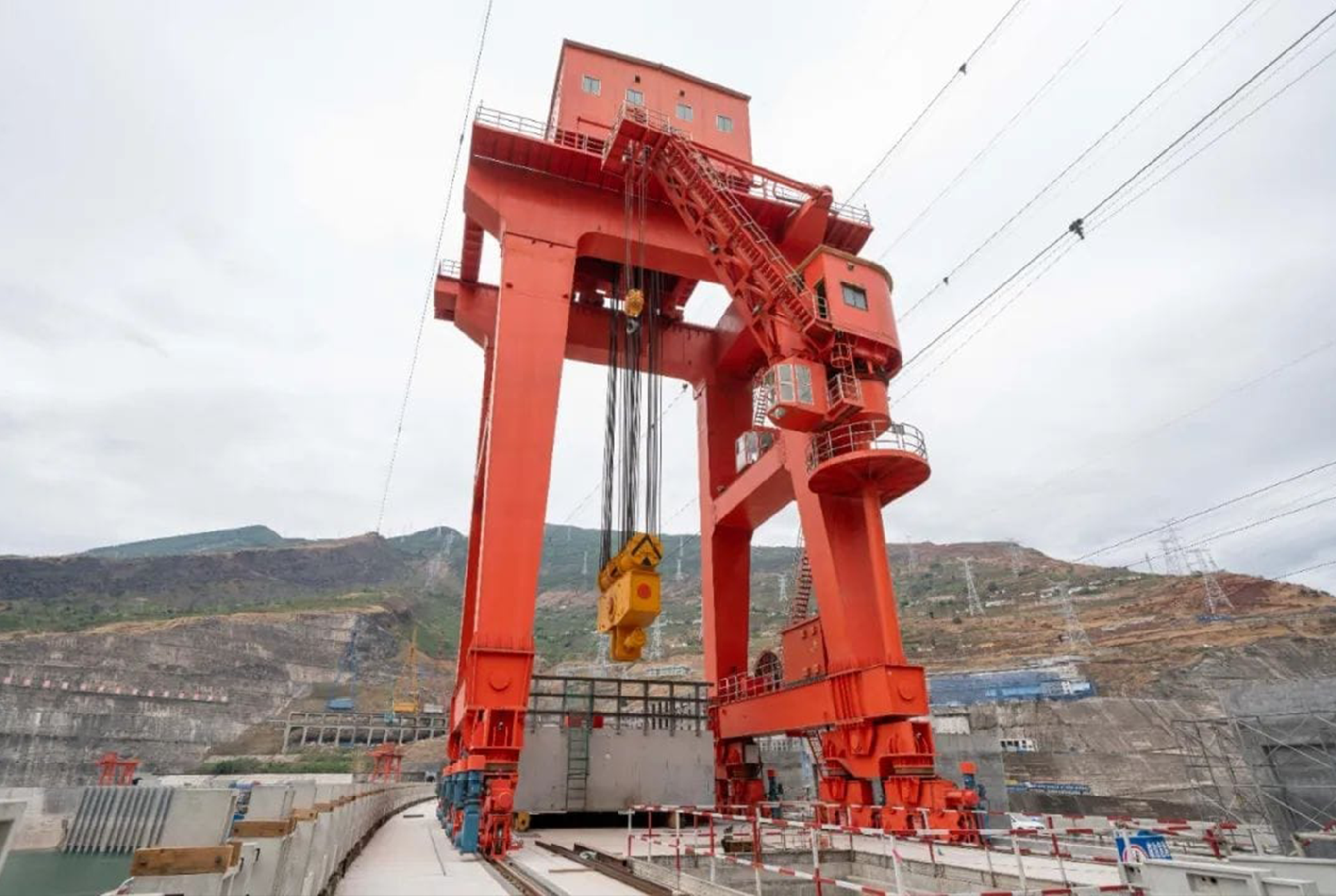
Spillway gates, intake gates, stoplogs, trash racks and turbine components require different systems for operation, installation and maintenance. A permanent gate hoist belongs to the hydraulic structure; outage rigging must not replace it.
Typical Applications
Spillway gate lifting
Hydropower maintenance
Water-control systems
Dam construction projects
Hydraulic infrastructure operations
Determine the Actual Load
Gate Weight Is Only One Component
Calculations must use the governing load case, not dry gate mass alone. USACE guidance includes gate weight, vertical hydraulic forces, seal friction, roller or trunnion friction, silt, ice and other operating resistance. Misalignment, corrosion, debris or jammed guides can increase breakout force.
Buoyancy may reduce apparent underwater weight but does not remove seal friction, hydraulic downpull, sediment adhesion or binding. Handle stoplogs and trash-rack sections from approved points with a lifting beam or equalizing arrangement. Skin plates, handrails and unverified brackets are not lifting points.
Vertical-lift gates commonly need synchronized support at both ends. Unequal rope payout or sling length can rack the gate and concentrate load at one connection. Verify centre of gravity, point spacing, synchronisation, head condition and clearances before movement.
Select the Lifting System
Permanent Operation and Maintenance Lifts
Long-lift gates may use wire-rope drum hoists, purpose-designed chains or hydraulic cylinders. For wire rope, verify construction, fleet angle, drum and sheave diameters, terminations, corrosion protection and load sharing. ISO 4309 provides care, inspection and discard principles for crane and hoist ropes.
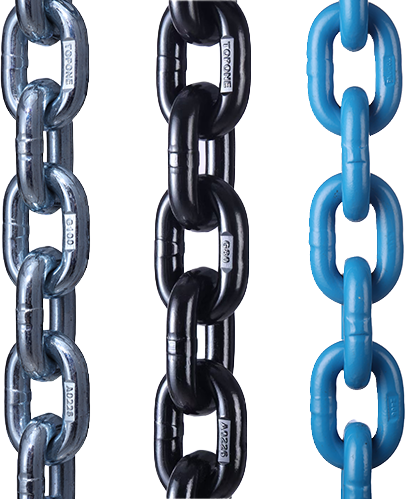
TOPONE Grade 80 chain slings suit short maintenance lifts of gate sections, machinery, pumps and structural parts where abrasion resistance and adjustable length are useful. The catalogue specifies quenched-and-tempered alloy-steel components, EN 818-4 construction and a 4:1 lifting design factor.
Sling angle changes capacity. TOPONE lists its 16 mm two-leg Grade 80 sling at 8.4 t WLL when each leg is within 45° of vertical, but 6.0 t between 45° and 60°. This 28.6% reduction shows why a wider angle cannot use the vertical-leg rating. Uneven load distribution may reduce available capacity further, so the lift plan and lowest-rated component govern.
Wire-rope slings suit longer connections and large sections. Polyester webbing protects finished surfaces, but plate edges, rust scale, grit and welding heat require sleeves or a different sling. Do not drag webbing through water or around unprotected steel edges.
Lifting Beams and Hardware
A spreader beam can keep legs near vertical, reduce compression on a gate leaf and distribute load between designed points. Master links, shackles, hooks, shortening devices and beam lugs require compatible WLLs. Side-loaded shackles, twisted chain, tip-loaded hooks and improvised links are unacceptable.
The Bureau of Reclamation’s 2024 FIST 2-7 procedure provides a documented example. During unwatered wicket-gate adjustment, a wire-rope sling may be tightened with a ratcheting hoist while linkage is connected. The sling rating must exceed the hoist rating, and the hoist must provide overload indication.
Maintenance Safety
Isolation, Inspection and Controlled Movement
Isolate electrical, mechanical, hydraulic, pneumatic, gravitational and water-pressure energy under the facility procedure. OSHA 29 CFR 1910.269(d), where applicable, requires documented hazardous-energy control for power-generation maintenance. Brakes or hydraulic pressure alone are not supports; use approved mechanical blocking.
Inspect tags, chain links, hooks, latches, shackles, lifting points and beam welds before use. Check wire rope for broken wires, corrosion, diameter reduction, kinks, crushing, birdcaging and damaged terminations. After taking up slack, confirm balance, alignment, brake holding and clear travel. Stop if tension rises unexpectedly or movement becomes uneven.
Information Required by TOPONE
Provide gate type, drawings, dry and immersed mass, centre of gravity, lifting-point ratings, head condition, friction and breakout loads, lift height, sling angles, operating cycles, corrosion exposure and governing standard. TOPONE can then configure compatible chain slings, links, hooks, shackles and lifting-beam interfaces for the approved plan.