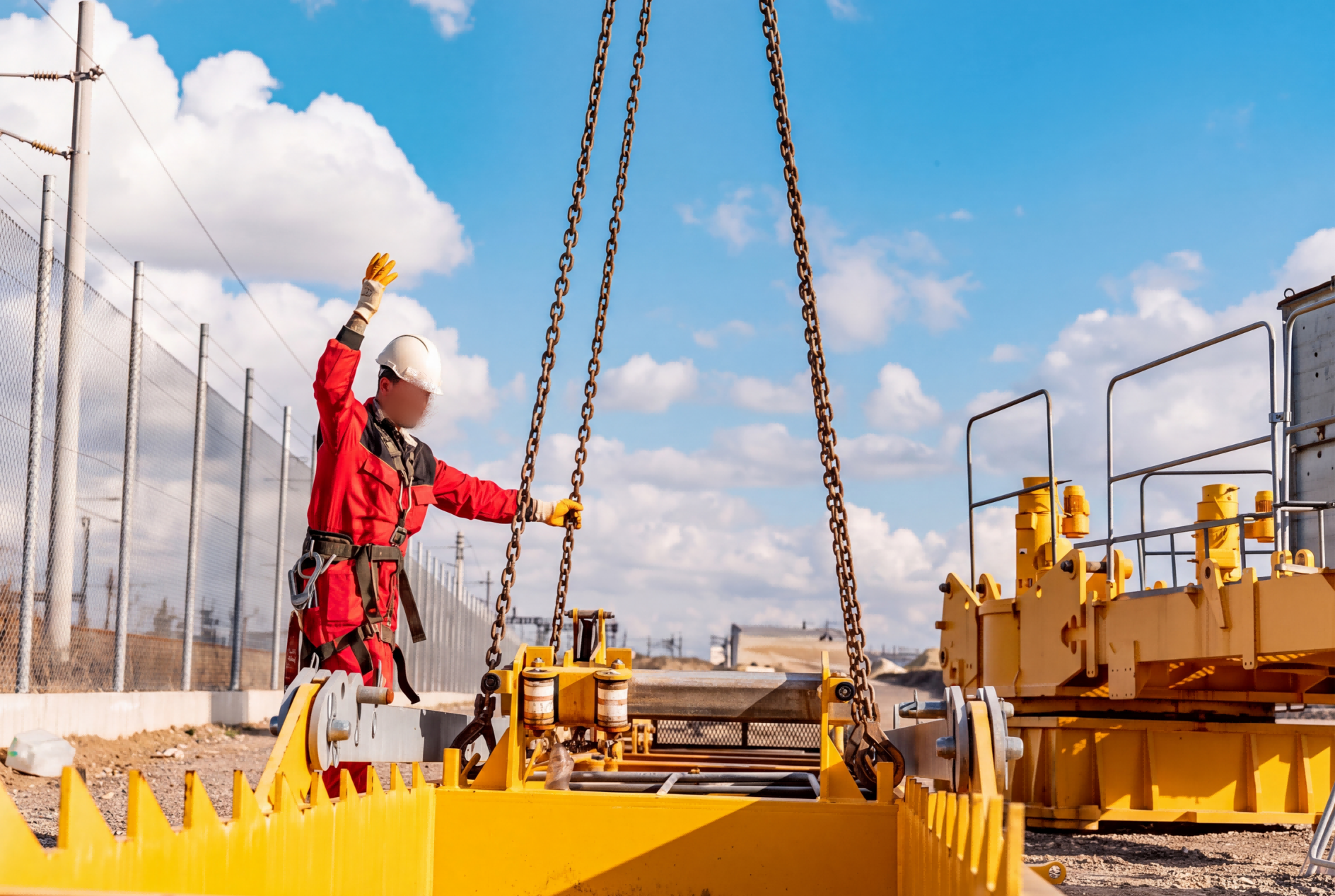
Construction projects lift steel beams, pipe spools, HVAC units, generators and prefabricated components into confined positions. Mobile cranes may complete the main lift but cannot always remain during alignment. Portable chain hoists provide controlled movement from an engineered suspension point.
Chain Hoist Applications in Construction
Steel Structure Installation
Chain blocks position beams, brackets and fabricated sections during connection work. The suspension beam, clamp, trolley and temporary support must be rated for the applied forces.
Pipeline, HVAC and Equipment Positioning
Pipe spools, ventilation modules and machinery require slow movement to align flanges, bases or mounting holes. Connect the hoist through rated lifting lugs, slings, shackles or a lifting beam. Pipe brackets, ventilation flanges and temporary holes are not lifting points unless designed and approved.
Temporary Lifting in Confined Areas
Portable hoists can operate from rated beams, gantries or designed anchors where crane access is restricted. Unverified structural sections must not be used as suspension points.
Selecting a Construction Chain Hoist
Load, Headroom and Suspension
Confirm suspended mass, center of gravity, lifting points, lift, headroom, travel and installation sequence. Mass includes the component, lifting beam, slings, shackles and attachments. System capacity is limited by its lowest-rated component.
Temporary supports must withstand vertical load and forces caused by trolley travel or misalignment. Use a compatible trolley for horizontal movement; never side-pull the load chain.
Manual Chain Hoist
A manual chain block suits intermittent erection and alignment where power is unavailable. The TOPONE HSZ-C2 is catalogued at 2 t rated capacity, 3 m standard lift and 3 t test load. It has a 380 mm minimum distance between hooks, two falls of 8 mm load chain and 14 kg net weight. A load limiter is an available option. These figures apply only to this model.
Electric Low-Headroom Chain Hoist
An electric chain hoist suits repeated lifting only when duty class, starts per hour, speed, power and controls match the work cycle. TOPONE’s HHBB layout reduces the distance between the hoist body and beam track.
The HHBB-2.0B is rated at 2.0 t with 3 m standard lift, 1.5 kW motor and 3.4 m/min lifting speed. It uses two falls of 7.1 mm load chain and weighs 69 kg. Voltage, duty rating, ingress protection and controls must be confirmed for the order and site.
Load Positioning and Multiple Hoists
Controlling the Load
Keep the hoist above the load line. Protect slings from sharp edges and calculate sling-angle forces. Tag lines may control rotation but must not force the load against an obstruction. After positioning, place the component on an engineered support before personnel work beneath it.
Two-Hoist Lifting
Long beams, pipe sections and HVAC modules may need two lifting points. Two hoists must not be assumed to divide load equally. Load position, hook spacing, support deflection and movement can transfer load between units. The lift requires calculated distribution, sufficient capacity for each hoist and coordinated operation. Use purpose-designed controls where synchronization is required.
Hoist Chain and Safety Requirements
Grade T Hoist Chain
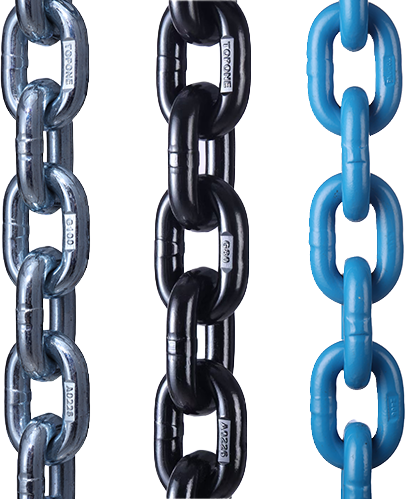
TOPONE identifies the HSZ-C load chain as high-grade alloy steel. When EN 818-7 or ISO 3077 is specified, use fine-tolerance Grade T hoist chain manufactured, heat-treated and tested to the applicable standard. Diameter, pitch, inside width and material condition must match the load wheel, guides and reeving. Chain-sling chain is not an approved replacement.
Inspection and Safe Operation
Check suspension, trolley, identification, hooks, latches, brake, controls, limits, chain container and reeving before lifting. Inspect chain wear, elongation, twist, gouges, corrosion and stiff links against the manufacturer’s limits. Remove abnormal equipment from service.
Never overload, shock-load, side-pull, lift people, stand beneath a suspended load or use a travel limit as the normal stop. Stop if the chain twists, brake slips, support moves or abnormal sound occurs.
Applicable Standards and TOPONE Solution
Hand-operated hoists may follow EN 13157, powered hoists EN 14492-2, and relevant hoists ASME B30.16 where required. TOPONE can match the hoist, trolley, load chain and accessories to verified load, suspension, headroom, travel and duty data. Final configuration must be confirmed through the lifting plan and product documentation.