Steel mills move coils, billets, slabs, plates and fabricated products between plants, ports, warehouses and jobsites. High density creates concentrated deck and axle loads, while steel-to-steel contact gives limited friction. Safe transport combines load distribution, physical blocking and rated lashings.
Typical Applications
Steel coil transportation
Billet and slab securing
Steel plate logistics
Metallurgical cargo transport
Industrial warehouse transfer
Secure Each Product by Its Movement Risk
Steel coils need restraint matched to eye orientation. A crosswise-eye coil must be supported off the deck by a coil well, cradle, bunks, chocks or secured wedges that cannot loosen. U.S. 49 CFR §393.120 applies specific rules when one coil or a group weighs at least 2,268 kg (5,000 lb). An individual crosswise-eye coil requires through-eye restraint against forward and rearward movement; an X-pattern through the eye is prohibited.
Billets, slabs and plates should rest on sound dunnage that transfers weight into suitable deck structure. Stable tiers, end blocking, stanchions or a rated bulkhead provide containment, while direct chains control longitudinal and lateral movement. Dunnage must not split, crush, roll or loosen. Separate stacks that can move independently and unitise thin sheets before securing the package.
Select Compatible Restraint Equipment
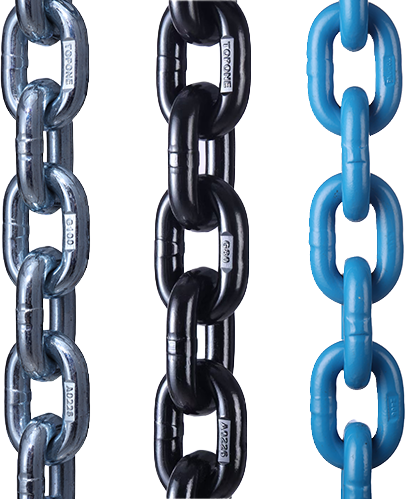
British government guidance identifies metal cargo as vulnerable because of its mass, size and low friction, and prefers chains combined with physical barriers. Alloy-steel lashing chain should have welded, heat-treated and proof-tested links with traceable grade, size and capacity. Hooks, connectors, binders and anchors must match because the weakest component limits the assembly.
Use the capacity system required by the market: lashing capacity under EN 12195-3 or working load limit under applicable U.S. rules. A lifting-chain rating is not automatically valid for road lashing. Lock binders according to their instructions and never use improvised extension handles.
Web lashings can protect finished surfaces but require edge protection and may be damaged by sharp edges, mill scale or heat. For hot steel, oil or contaminated decks, verify material limits rather than assuming clean-surface friction values.
Design with Verifiable Numbers
Rules vary by jurisdiction and mode. U.S. 49 CFR §393.102 applies separate breaking-strength criteria of 0.8 g forward and 0.5 g rearward and lateral. Section 393.106 requires aggregate tiedown WLL of at least half the cargo weight, while §393.120 adds coil-specific arrangements.
For a hypothetical 20,000 kg coil, the general half-weight threshold is about 98.1 kN or 22,050 lbf. A direct vehicle-to-cargo tiedown contributes half its WLL; four equal assemblies would each need at least 11,025 lbf WLL for this threshold alone. The 0.8 g forward force is about 157 kN. Coil orientation, angles, chocks, anchors and directional resistance still require separate checks.
Road calculations do not automatically apply to rail, vessel or combined transport; each mode needs its governing rules and verified acceleration assumptions.
Loading and Inspection
Remove loose scale, ice, oil and debris. Verify deck and axle loading, place dunnage as planned and use rated anchors. Keep chains untwisted, seat hooks fully, tension binders without shock and recheck after settlement.
Reject cracked, stretched, bent or severely corroded links, distorted hooks, damaged binders, loose chocks and components without readable capacity identification. Repeated cycles require documented pre-use checks and quarantine. Do not field-weld or heat load-bearing parts without an approved procedure.
Documented Lesson
In the 1998 NTSB Portage accident, a train struck trailers carrying steel coils. After impact, the single chain securing a roughly 19-ton coil broke; the coil entered a passenger car, causing three fatalities and five minor injuries. This was a collision, not an ordinary road-lashing failure, but it shows the consequence of uncontrolled cylindrical cargo.
TOPONE supplies compatible cargo-control components and technical support for steel transport systems based on verified cargo, vehicle and route data.