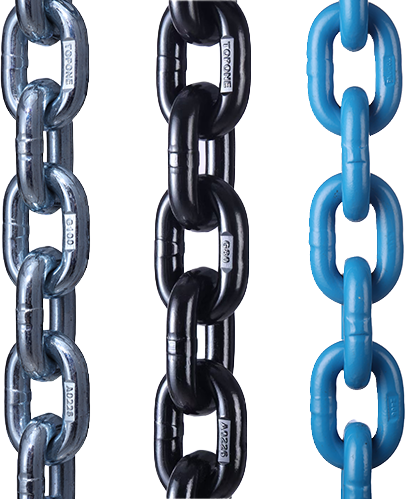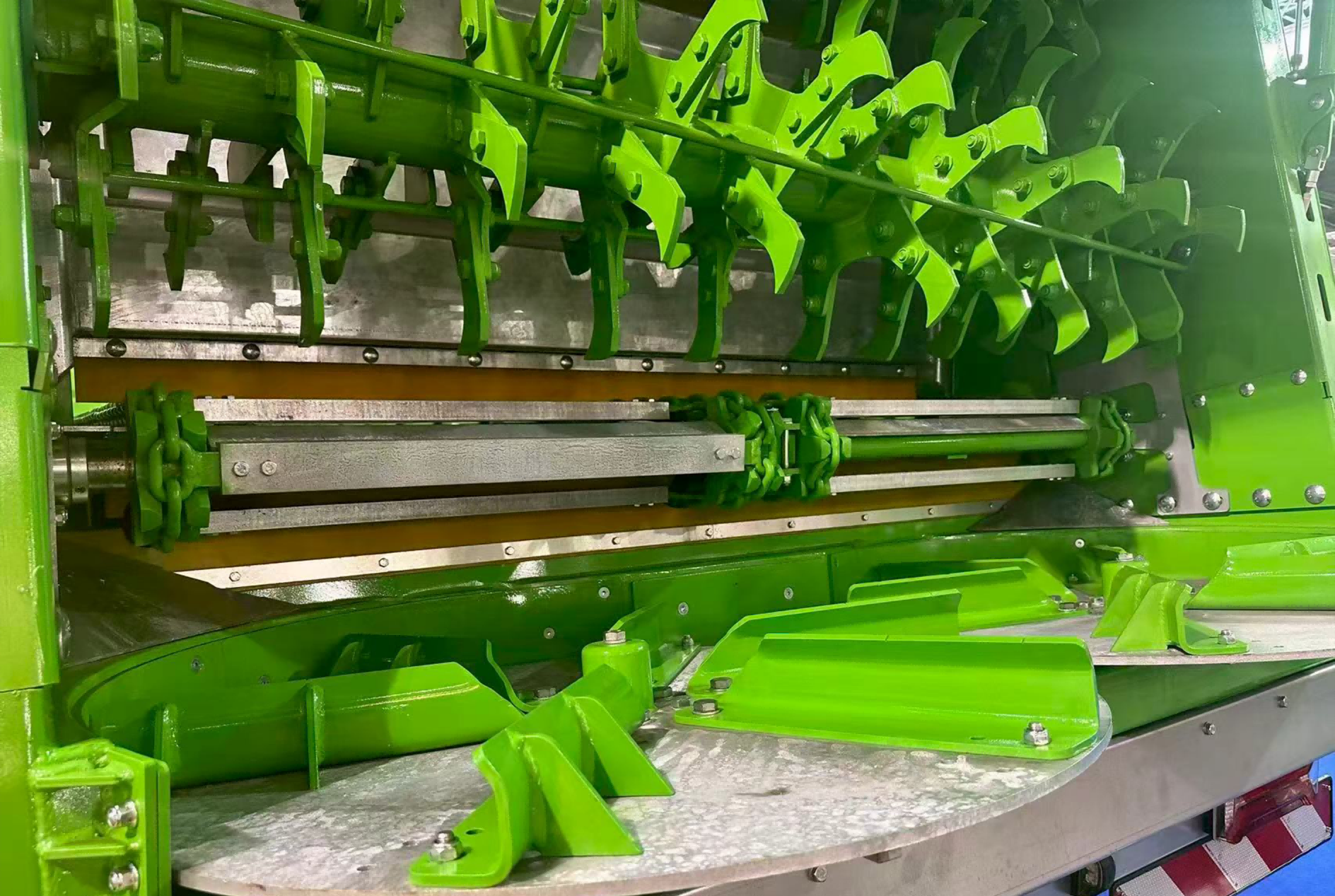
Large farms use manure spreaders to transport and distribute solid manure, compost and bedding mixtures. Their conveyor systems operate under mud, moisture, corrosive residues, abrasive soil, field vibration and repeated starts. Reliable operation depends on matching the apron chain, crossbars, sprockets and drive protection to the machine and material.
Typical Applications
Heavy manure spreaders
Organic fertilizer transport
Agricultural trailer systems
Farm waste distribution
Large-scale field operations
How the Apron System Works
Most apron spreaders use two or more parallel chains connected by crossbars or flights. The apron moves material toward the rear beaters or discharge rotors. A separate drive chain may transmit power from a gearbox, wheel drive or hydraulic motor.
The apron chain carries and pulls the material, while the drive chain transmits torque. These chains perform different functions and must not be selected using the same load figure.
Frozen material, stones, compacted bedding, uneven loading and blocked beaters can produce severe peak loads. A shear bolt, torque limiter or hydraulic pressure control can protect the transmission, but it cannot compensate for an undersized apron chain.
Matching Chains, Crossbars and Sprockets
Steel detachable chains and open-barrel steel pintle chains are established agricultural conveyor formats. ASME B29.300 defines interchangeability dimensions for agricultural chains, attachments and sprockets. It does not determine the working load or fatigue life required for a specific spreader, which must be verified separately.
Selection should confirm:
Chain type and pitch
Number and spacing of chain strands
Attachment position and orientation
Crossbar dimensions and spacing
Sprocket tooth profile and bore
Shaft centre distance
Conveyor travel direction
Available tensioner adjustment
All parallel strands should have compatible effective lengths. Replacing only one elongated strand can pull the crossbars out of square, concentrate load on one side and cause the chain to climb the sprocket teeth.
Pins, barrels or bushings may be heat-treated where joint wear controls service life. Link components require a suitable balance of strength and impact toughness, while crossbars must resist bending under uneven material loads.
Crossbar and attachment welding requires controlled procedures. Excessive welding heat can distort the assembly or alter the properties of nearby heat-treated components. Dimensional inspection, hardness control, material certificates and batch traceability help maintain consistent replacement quality.
Protective coatings can delay external corrosion, but manure and soil may abrade working surfaces. Coating selection must therefore be considered together with base material, joint hardness, cleaning frequency, lubrication and expected corrosion allowance.
Calculating Required Apron Pull
Chain tensile strength is not a complete design value. Required pull can include floor friction, conveyor inclination, material compaction, acceleration and temporary blockage. Sprockets, shafts, bearings, crossbars and overload protection should be evaluated using the same design load.
The following is a hypothetical calculation, not a machine rating.
Assume:
Moving material mass = 12,000 kg
Conveyor angle = 8°
Effective sliding coefficient = 0.35
Start-up factor = 1.5
F = 1.5 × 12,000 × 9.81 × (0.35 × cos 8° + sin 8°)
F ≈ 85.8 kN
With two perfectly equal strands, the theoretical load would be 42.9 kN per strand. Actual load sharing is rarely perfect. Chain, attachments and crossbars therefore require approved factors for shock loading, fatigue and unequal strand loading.
The assumed friction coefficient must be replaced with validated data for the actual floor, manure consistency and operating condition before product selection.
Tension, Alignment and Inspection
Apron tension is machine-specific. Published spreader manuals demonstrate this variation: one model specifies approximately 2 inches of centre lift, while another specifies 3–5 inches. These values are not interchangeable and the relevant machine manual must take priority.
Excessive slack can increase impact, crossbar movement and sprocket climbing. Excessive tension increases loads on pins, bearings, shafts and sprockets. Both sides should be adjusted equally so that the crossbars remain square to the direction of travel.
Routine inspection should cover chain articulation, pin retention, pitch elongation, cracked or deformed links, bent crossbars, attachment welds, sprocket wear, shaft alignment and remaining tensioner travel. Packed residue should be removed after operation.
Only the lubricant and interval approved by the machine or chain manufacturer should be used. In heavily contaminated environments, unsuitable lubricant can combine with dust and grit to form an abrasive paste.
Safe Maintenance
Where applicable, BS EN 690:2013 addresses manure-spreader safety, including conveyor guarding and maintenance access. Before adjustment or cleaning, isolate PTO, hydraulic and electrical power, secure raised components, chock the wheels and prevent unintended restart. Jams must never be cleared and tension must never be measured while the apron or beaters can move.
TOPONE develops matched agricultural chain, attachment, crossbar and sprocket solutions based on verified machine dimensions, operating loads and environmental conditions.