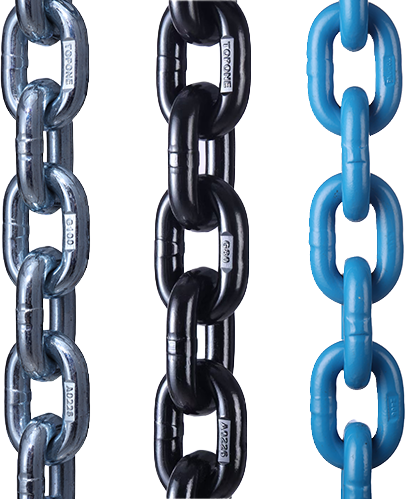
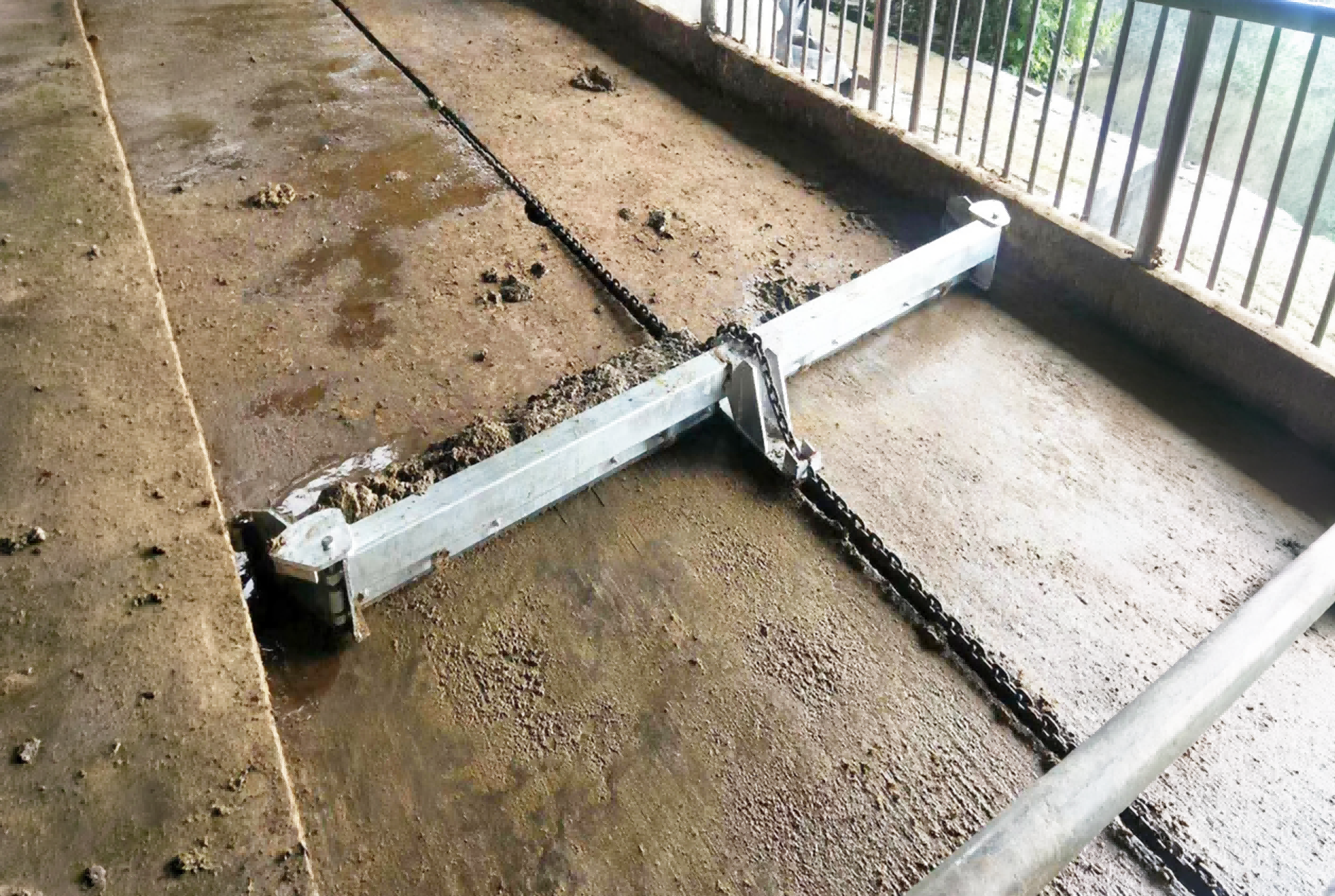
 Automated scraper systems remove manure from livestock floors, alleys and collection channels at controlled intervals. They operate around animals while exposed to moisture, slurry, bedding fibres, grit, wash water and repeated reversing loads. Reliable cleaning depends on matching the scraper, traction chain, wheels, tensioner, drive and controls.
Typical Applications
Poultry farms
Dairy facilities
Pig breeding farms
Livestock housing systems
Automated waste handling
System Configuration
A chain-driven installation normally uses a continuous or reversing chain to pull one or more scraper frames. Its components can include a drive sprocket or pocket wheel, corner wheels, gearbox, tensioner, guide channel, connecting links, position sensors and overload protection.
Floor scrapers are common in dairy and pig alleys. Poultry buildings may instead use manure belts or channel conveyors. Housing layout determines the system.
Steel cable, synthetic rope and hydraulic drives are alternatives. Their bending, termination and inspection requirements differ, so they are not direct chain replacements.
Chain and Wheel Selection
Welded round-link chain can serve systems designed around pocket-wheel engagement. Selection must confirm chain diameter, pitch, internal width, calibration, connector geometry, route length, corner arrangement, operating direction and manufacturer-approved working force. Minimum breaking force is not the permitted operating load.
DIN 766:2015-06 applies only when specified by the system drawing. It covers quenched-and-tempered grade 3 round steel link chain with a pitch of 2.8d for chain conveyors; it is not a universal manure-scraper standard. Proprietary systems may require other dimensions.
Chain, pocket wheels and corner wheels must be dimensionally compatible. A new chain on heavily worn wheel pockets may seat incorrectly, produce impact and develop accelerated pitch wear.
Materials and Manufacturing
Round links are formed and butt-welded before controlled heat treatment and calibration. Heat treatment must balance joint and wheel-contact wear resistance with toughness for starting, reversing and temporary obstruction. Quality control should include weld inspection, dimensional checks, mechanical testing and batch traceability under the agreed specification.
A specified zinc coating can delay external rust, but it wears at articulating and wheel-contact surfaces. Uncoated stainless steel should be considered only after its grade, chloride exposure, cleaning chemicals and wheel compatibility are verified.
Airborne ammonia alone is not a reliable corrosion predictor. Agricultural research found that ammonia concentration did not produce the same corrosion response in every tested metal. Condensation and direct contact with manure, urine, salts and wash chemicals must also be assessed.
Hypothetical Pull Calculation
Required pull can be estimated by:
F = Ks × m × g × (μ × cos θ + sin θ)
Hypothetical inputs:
Moving scraper and manure mass = 1,500 kg
Effective sliding coefficient = 0.35
Floor slope = 1°
Starting factor Ks = 1.5
F ≈ 8.1 kN
For a 0.15 m pitch radius and an assumed 85% drive efficiency:
T = F × r ÷ η ≈ 1.43 kN·m
At a hypothetical speed of 0.08 m/s, theoretical power is approximately 0.76 kW. These values exclude corner-wheel, guide, compaction and obstruction losses and are not equipment ratings. A continuous loop must not automatically be divided into two equal loads; tight-side tension and the actual chain route govern selection.
Tension, Inspection and Safety
Chain tension is model-specific. Excess slack can cause impact or wheel jumping, while excessive tension raises chain, bearing and shaft loads. Inspection should cover pitch over several links, link-diameter loss, welds, twist, connectors, wheel pockets, guides and remaining tensioner travel.
Drive and corner-wheel nip points require guarding. Before cleaning or adjustment, isolate all energy, disable automatic restart and secure the scraper against movement. Position sensors, overload response, emergency stops and animal-protection functions require regular testing. ISO 12100 provides a general machinery risk-assessment framework; local regulations and machine instructions remain controlling.
TOPONE supplies matched scraper chain, connecting link, pocket wheel and tensioning solutions based on verified dimensions, loads and environmental data.